

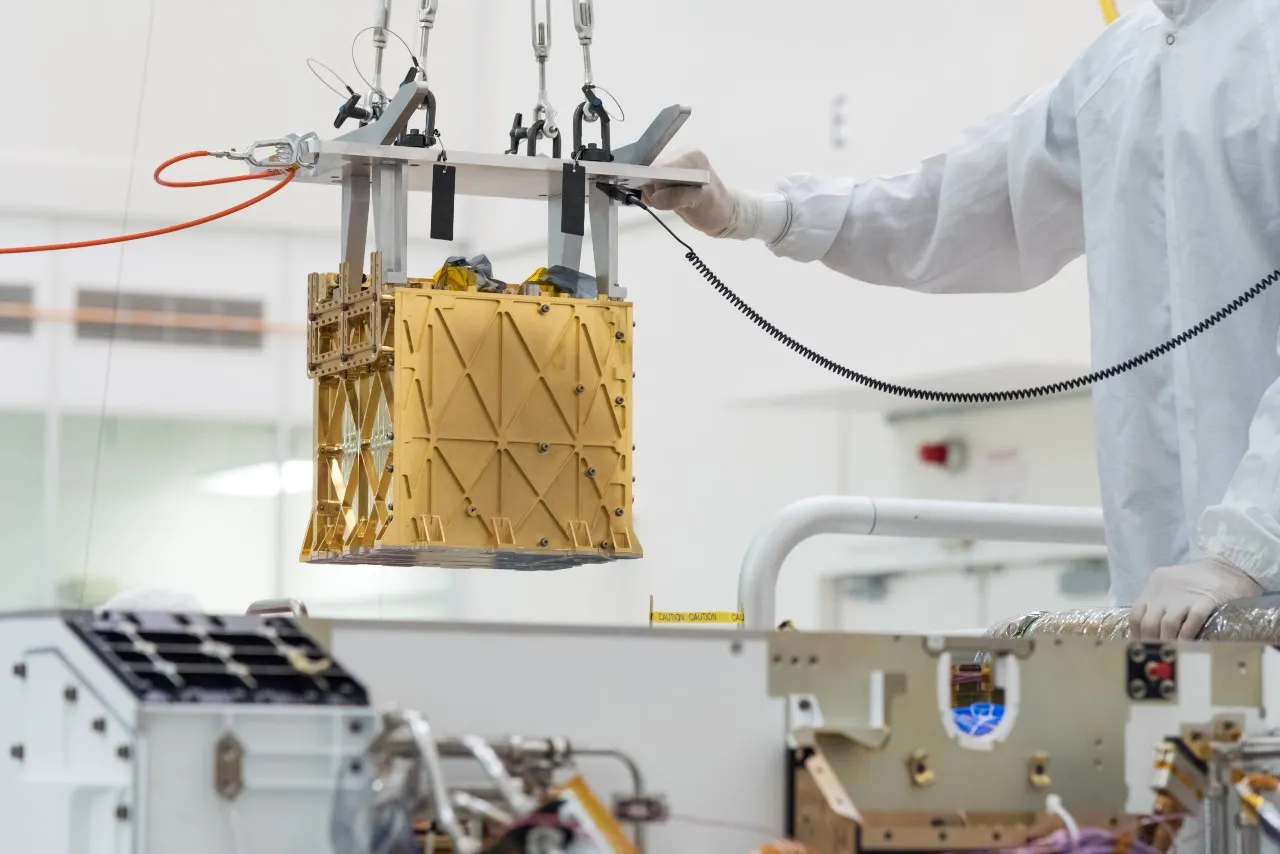
The use of in-situ propellants was a central pillar of the plan to explore much of the solar system. The logic is simple: the less mass (particularly in the form of fuel) we have to extract from Earth’s gravity, the cheaper and therefore more plausible the missions requiring that fuel will be. However, a new paper by Donald Rapp, a former engineering division chief at NASA’s JPL and co-investigator of the successful MOXIE project on Mars, argues that despite the lure of making your own fuel on the moon, it may not be worth developing the systems to do so. Mars, however, is a different story.
Let’s say something up front: Many organizations, but especially NASA, are currently struggling with their lunar exploration programs. A perfect example is the cancellation last year of the VIPER rover, originally intended to search for water ice in the south polar regions of the moon. His rejection highlighted a simple fact: we have never succeeded in producing fuel on the Moon from the resources collected there. And it doesn’t look like this will be easy.
When discussing the production of fuel on the Moon, two main techniques are suggested. One is the process of carbothermal reduction, the other is the degradation of polar ice. Both have serious logistical disadvantages and limited de-risking of their technology.
Fraser interviews Michael Hecht, one of the other researchers on the successful MOXIE demonstrator.
Methane is an important component of the carbothermal reduction process. It is not available on the Moon and must be transported from Earth. In this process, regolith is heated to over 1650℃, creating a melt pool. Methane is then introduced to reduce the oxides present in the regolith and release the oxygen stored therein. Not only does this require the external supply of an explosive gas, it also requires significant energy to bring a reactor to that temperature. According to Dr. Rapp is also required to have a 14-stage production cycle that must include autonomous excavators, vibratory tilters and dump trucks. None of these have yet been tested in a real lunar environment, but some have been preliminary tested in vacuum chambers.
While we know the general chemical makeup and shape of regolith, we have much less data about the ice in the polar ice caps on the Moon. We know it’s there, but is it snow or rock-hard permafrost? No one really knows, and that would dramatically change the processing technique used to obtain it. VIPER was intended to provide some ground truth on this question, but its cancellation leaves a gaping hole in our knowledge of the water resources available there. But even if we understood what is available, there are still logistical nightmares about extraction, including the fact that many of the permanent shadow regions where the ice would exist are literally lacking sunlight that could be used to power the processing systems to produce the oxygen.
Compare the massive risk reduction these fuel processing methods require with that for Mars. MOXIE, where Dr. Rapp, admittedly involved due to his key role in the project, has already been successfully used on Mars and separates oxygen from the Martian atmosphere. Using the atmosphere that the moon lacks is one of the technology’s key advantages. No complex mining, sorting and waste disposal technologies are required. You simply turn on a pump and oxygen and carbon dioxide come out the other side. Scaling is a relatively simple engineering challenge compared to the massive technological challenge facing fuel production on the Moon.
JPL video showing how MOXIE was used on Mars. Photo credit: NASA Jet Propulsion Laboratory YouTube channel
A final consideration for where to allocate capital resources is the amount of fuel needed to transport fuel from low Earth orbit (LEO) to these celestial bodies. According to the calculation by Dr. Rapp, carrying 1 kg of fuel to the Moon requires 2.5 kg of fuel consumed, while transporting 1 kg to Mars requires between 8 and 10 kg of fuel consumed. Even if engineers had developed a way to efficiently extract oxygen from the lunar soil, the return on fuel saved would still be only a quarter of what it would be if they invested in technology that could do this on Mars.
However, assuming that Mars is our next destination for a return mission. Currently, the mission is on a knife’s edge due to budget problems for the Mars Sample Return mission, which could use technology like MOXIE. While this may be the most expensive option, getting in-situ fuel production up and running in a world where we actually plan to make some use of it in the next few decades could be more valuable than developing a technology that might be easy to scale but would remain unused for decades to come. Resources for space exploration are limited, and sometimes deciding where best to use them doesn’t depend entirely on making sure the technology works.
Learn more:
EurekaAlert / Beijing Institute of Technology Press – NASA’s Near-Term In-Situ Propellant Production for Mars and Moon: Complexity versus Simplicity
D. Rapp – NASA’s Short-Term In-Situ Fuel Production for Mars and the Moon: Complexity versus Simplicity
UT – This new robot has a clever twist on moon mining
UT – Blue Alchemist is one step closer to creating sustainable infrastructure on the Moon

Comments are closed.