

The Federal Aviation Administration (FAA) has ruled that SpaceX can resume Falcon 9 rocket launches while an investigation into a failed July 11 mission continues. The next launch could take place as early as this evening.
The FAA clearance came after SpaceX reported that the failure was caused by a crack in a sensor line for a pressure sensor connected to the upper stage's liquid oxygen system. This resulted in an oxygen leak that affected the upper stage engine's performance. As a short-term solution, SpaceX is removing the sensor line and sensors for future Falcon 9 launches.
SpaceX has scheduled the launch of a Falcon 9 from NASA's Kennedy Space Center in Florida for July 27, at 04:21 a.m. CET (00:21 a.m. ET) at the earliest. Like the July 11 mission, this one will also be about putting a group of SpaceX's Starlink satellites into low Earth orbit.
FAA investigations into launch anomalies typically take months to complete, but in this case the agency said on July 11 that it had “determined that the anomaly did not pose a public safety concern.” “The public safety determination means the Falcon 9 can resume flight operations while the overall investigation remains open, provided all other licensing requirements are met,” the FAA said.
SpaceX said it has been working under the FAA's oversight to determine the most likely cause of the anomaly and take corrective action, and has submitted an accident report to the agency to pave the way for a public safety determination.
The company said the upper stage's liquid oxygen sensor line had broken “due to fatigue caused by high stress from engine vibration and looseness in the clamp that normally holds the line in place.”
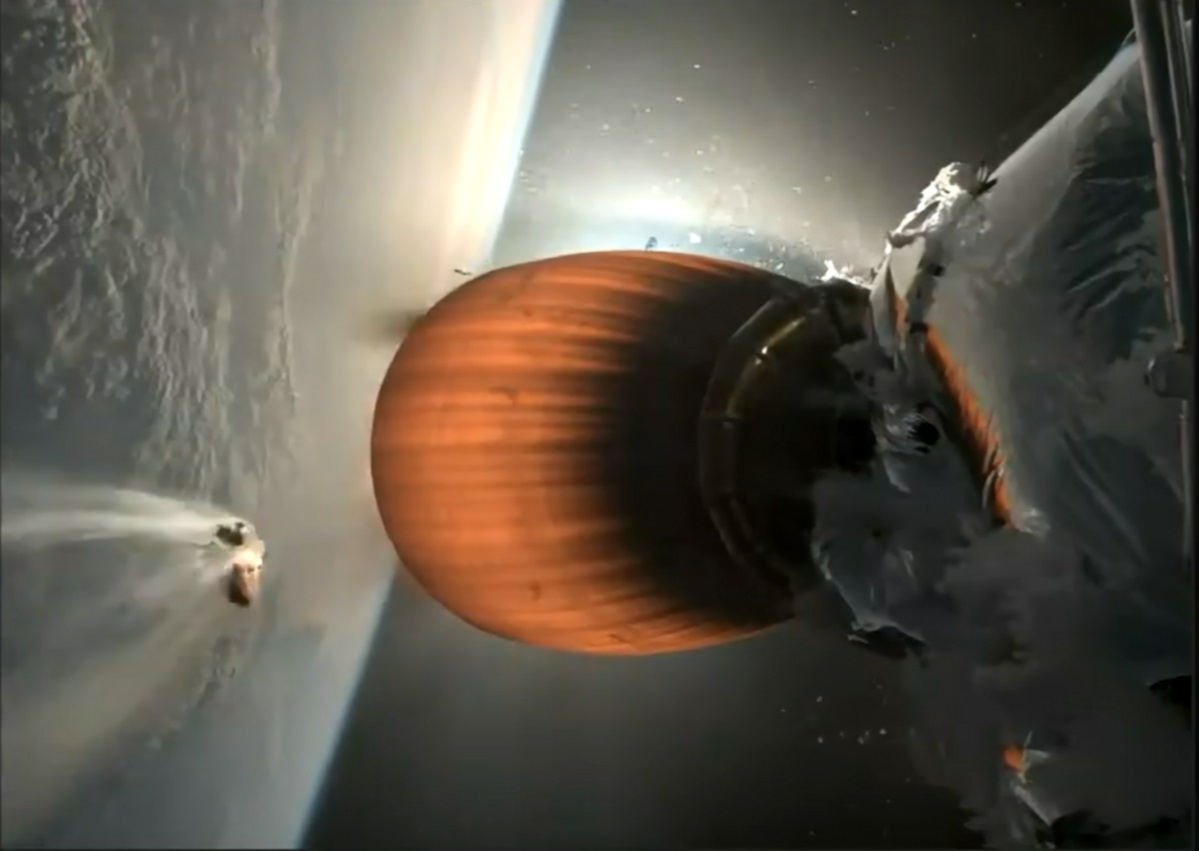
Despite the oxygen leak, the upper stage engine successfully completed its first burn and shut down for a planned idle period. During that period, however, the leak caused excessive cooling of the engine components – and when the engine was restarted, SpaceX said it experienced a hard start rather than a controlled burn. This damaged the engine hardware and caused the upper stage to lose altitude.
The upper stage was able to deploy its Starlink satellites, but at a lower altitude than planned. SpaceX was unable to raise the satellites' orbit quickly enough to overcome the effect of air resistance, and so all 20 satellites re-entered the atmosphere and burned up without causing any damage. It was the first failure of a Falcon 9 mission in eight years.
SpaceX said it has developed a strategy to remove the suspect sensor wires and clamps from the upper stages scheduled for upcoming Falcon 9 launches. “The sensor is not used by the flight safety system and can be covered by alternative sensors already present on the engine,” SpaceX said.
The resumption of flight operations gives hope that the upcoming Falcon 9 launches will take place without lengthy delays. A high-profile manned flight, the privately funded Polaris Dawn mission, was scheduled to launch on July 31. The mission's commander, billionaire entrepreneur Jared Isaacman, said in a post on the social media platform X that the crew would need a little more time for training.
“There are training currency requirements,” Isaacman said. “We'll probably have a few days of sim and EVA refresher training before launch. Most importantly, we have full confidence in SpaceX and they've mastered the second stage anomaly and resolution. We'll launch when we're ready, and that won't take long.”
Sarah Walker, director of Dragon mission management, said today that SpaceX is “still holding a late summer date” for the launch of Polaris Dawn, a mission that will include the first spacewalk by a private company.
Another high-profile Falcon 9 mission is to transport a quartet of American and Russian astronauts to the International Space Station in a SpaceX Dragon capsule. NASA said today that the Crew 9 mission is currently scheduled to launch no earlier than August 18. “We have followed the FAA's investigation every step of the way,” said Steve Stich, head of NASA's Commercial Crew Program. “SpaceX has been very transparent.”
The launch of an unmanned Dragon cargo capsule to the ISS is planned for September at the earliest.
Meanwhile, SpaceX is working on plans for the fifth test flight of its Starship/Super Heavy launch system. A static-fire engine test was successfully conducted on July 15 at SpaceX's Starbase launch complex in Texas, and the Starship team is awaiting launch clearance from the FAA.
The upcoming test flight will involve the Super Heavy booster flying back to Starbase and landing on the launch pad on its own using two giant arms called “chopsticks.” For the four previous test missions, SpaceX's flight plan called for the booster to splash down in the Gulf of Mexico. A change in the flight profile could require a re-evaluation of SpaceX's FAA license for Starship test flights.
Like this:
Is loading…

Comments are closed.