

This article was originally published by Christopher Carey on Cities today, the leading news platform for urban mobility and innovation reaching an international audience of city guides. For the latest updates, see Cities Today Twitter, Facebook, LinkedIn, Instagram, and Youtubeor sign up for Cities Today News.
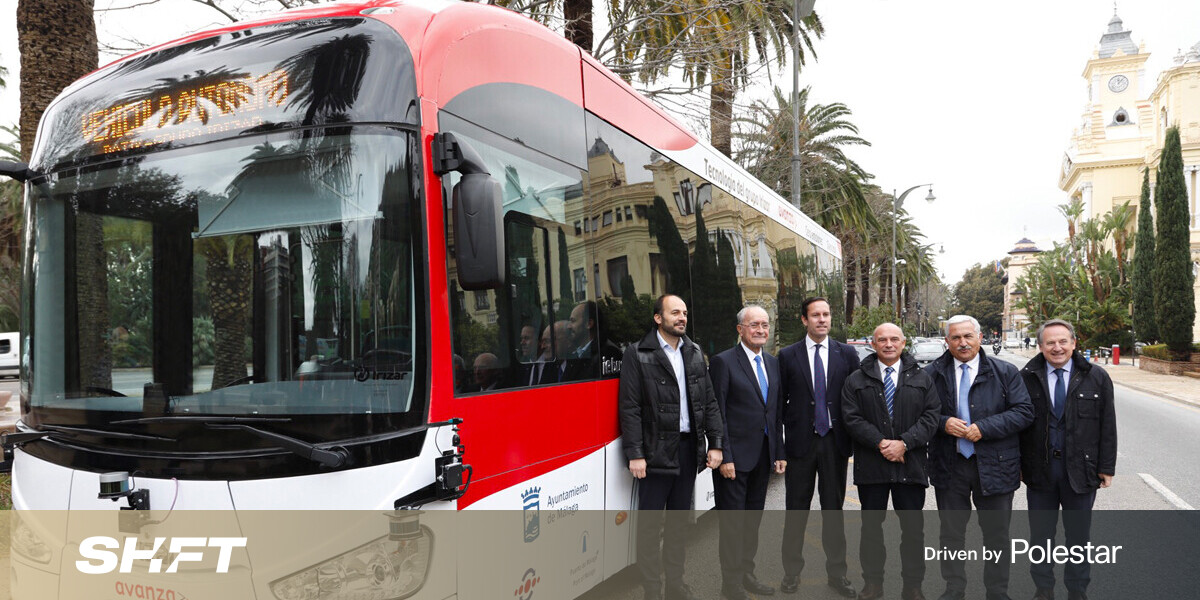
The Spanish city of Málaga has launched an autonomous electric bus service – the first of its kind in Europe.
The 60-seater bus drives around an eight-kilometer section of the city six times a day and is equipped with sensors and cameras that use artificial intelligence to improve their decisions based on the data recorded on the route.
There is a driver behind the wheel who takes control if necessary, as Spanish law currently does not allow vehicles to drive without one.
A handful of European cities, including Copenhagen and Hamburg, have tested eight-seat driverless electric shuttles. However, this is the first time a full-size bus has been used.
“The bus always knows where it is and what is around it,” said Rafael Durban Carmona, head of the southern division of the Spanish transport company Avanza.
It can also interact with traffic lights that have sensors that alert the bus when they turn red, Carmona told Agence France-Presse.
The project comes from the AutoMost Pilot program and is funded by Spain Center for Industrial Technological Development (CDTI), an agency that aims to develop technologies for automating vehicles in urban and industrial transportation applications.
[Read: How do you build a pet-friendly gadget? We asked experts and animal owners]
Avanza is working on the project with 11 partners including the Irizar group and has also worked with the Polytechnic University of Madrid. Together, CEIT-IK4 and the University of Vigo.
Singapore
In March 2019, Nanyang Technological University, Singapore (NTU Singapore) and Volvo Buses launched the “world first”. full size Trials of autonomous electric buses and Singapore’s first commercial driverless bus service was announced last month.
The service includes two routes in Singapore Science Park 2 and Jurong Island during a three-month pilot project. During this time, data is collected to assess the profitability of the on-demand service, as well as passenger safety and reliability of the service.
Singapore has been an important test bed in the development of driverless technology for the past five years.
In 2016, the US software company nuTonomy (later acquired by Aptiv and Hyundai Motor Group) launched the world’s first driverless taxi rides in the city-state.
Do electric vehicles excite your electrons? Do e-bikes make your wheels spin? Are you being charged by self-driving cars?
Then you need the weekly SHIFT newsletter in your life. Click here to login.
Published on March 10, 2021 – 14:13 UTC

Comments are closed.