

For decades, cosmologists have wondered whether the large-scale structure of the universe is a fractal: whether it looks the same regardless of scale. And the answer is: no, not really. But in a way, yes. Look, it's complicated.
Our universe is unimaginably large and contains approximately two trillion galaxies. These galaxies are not scattered randomly, but are assembled into a series of ever-larger structures. So there are groups that contain at most a dozen galaxies. Then there are the galaxy clusters, which contain thousands of galaxies and more. Above them are the superclusters, twisting and turning over millions of light years.
Is this the end of the story?
In the mid-20th century, Benoit Mandelbrot brought the concept of fractals into the mainstream. Mandelbrot didn't invent the concept of fractals – mathematicians have been studying self-similar patterns for ages – but he coined the word and ushered in our modern exploration of the concept. The basic idea of a fractal is that you can use a single mathematical formula to define a structure at all scales. In other words, you can make a fractal larger and smaller and it still retains the same shape.
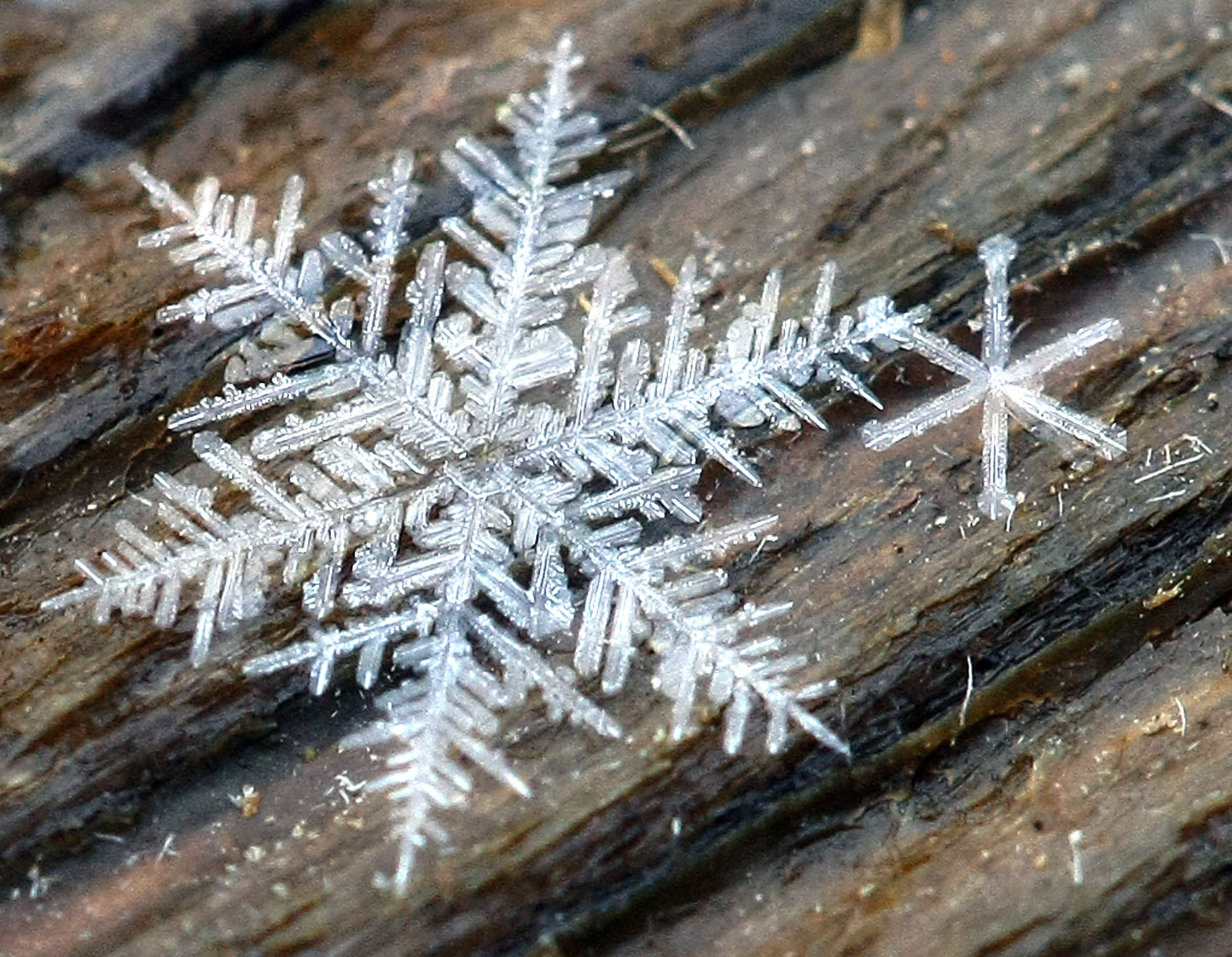
Fractals occur everywhere in nature, from the branches of a tree to the edges of a snowflake. And Mandelbrot himself wondered whether the universe was a fractal. If we zoom out, we will see the same structures over and over again.
And in some ways, that's exactly what we're seeing: a hierarchy of structures at ever-increasing scales in the universe. But this hierarchy has an end. At a certain scale, around 300 million light-years across, the cosmos becomes homogeneous, meaning that there are no longer any major structures and the universe (at that scale) is roughly the same from place to place.
The universe is definitely not a fractal, but parts of the cosmic web still have interesting fractal properties. For example, clumps of dark matter called “halos” that host galaxies and their clusters form nested structures and substructures, with halos containing sub-halos and sub-sub-halos within them.
Conversely, the cavities of our universe are not completely empty. They actually contain some faint dwarf galaxies… and these few galaxies are arranged in a subtle, faint version of the cosmic web. In computer simulations, the subcavities within this structure also contain their own bubbling cosmic webs.
So even though the universe as a whole is not a fractal and Mandelbrot's idea hasn't proven successful, we can still find fractals almost everywhere we look.
Like this:
Load…

Comments are closed.