

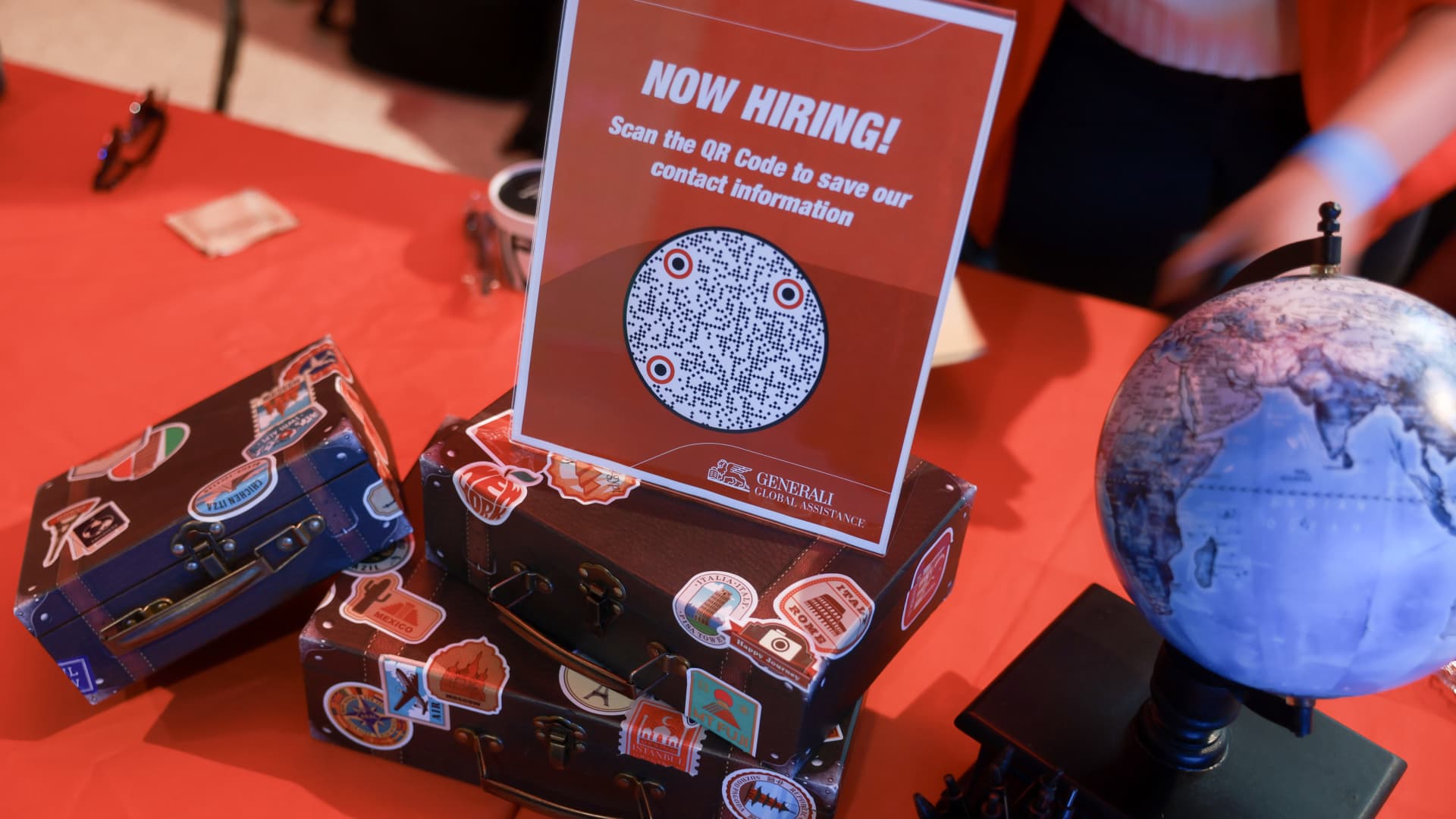
Job seekers attend the JobNewsUSA.com South Florida Job Fair taking place on June 26, 2024 at the Amerant Bank Arena in Sunrise, Florida.
Joe Raedle |
Another sign of cracks in the US labor market is a survey by the New York Federal Reserve Bank that found on Monday that the number of people who say they are employed is declining, the number of job seekers is increasing and dissatisfaction with pay is growing.
The thrice-yearly index of labor activity, confidence and job satisfaction in July reflected growing concerns about job security and an increase in the number of people planning to work beyond the typical retirement age. Workers continue to seek higher starting salaries but are receiving lower offers.
The results come as the unemployment rate continues to rise and policymakers on Wall Street and at the Fed are closely watching developments for clues about the direction the U.S. economy is headed.
Among the findings were that 88 percent of those who were employed at the time of the last survey in March still had a job, the lowest since data began in 2014. The share of those expecting to be unemployed also rose to 4.4 percent, up 0.5 percentage points from the previous year and the highest in the survey's history.
In addition, the proportion of those who have been looking for a new job in the last four weeks has risen to 28.4%, up 9 percentage points from a year ago and another historic high since March 2014.
Regarding wages, satisfaction with current compensation fell to 56.7%, down more than 3 percentage points from the same period in 2023. Satisfaction with benefits fell to 56.3%, down more than 8 points from last year, while satisfaction with opportunities for advancement fell to 44.2% from 53.5% last year. This was most pronounced among women, those without a college degree, and respondents with household incomes of less than $60,000.
The typical wage offer for full-time jobs has fallen slightly over the past four months to $68,905, while the average “reservation wage,” or the minimum compensation workers would accept for a new job, has risen to $81,147. That's about $2,500 more than a year ago, but only slightly below the record high set in the last survey.
Finally, the probability that they will work beyond the age of 62 rose to 48.3 percent of respondents. Among respondents who said they wanted to work beyond the age of 67, the proportion even rose to 34.2 percent. This corresponds to an increase of more than two percentage points.
Although the unemployment rate of 4.3% is considered low by historical standards, it has been rising recently, raising fears of a more general erosion of the economy. There was only a gain of 114,000 nonfarm jobs in July, so the August report, due out in early September, will be closely watched.
After its recent meeting, Fed officials described job growth as “moderating.” The central bank is widely expected to cut its benchmark interest rate by a quarter of a percentage point at its next meeting in September, the first cut in more than four years.

Comments are closed.