


When OpenAI announced its new shopping search features, I took the news with a grain of salt (perhaps with full force).
Over the last decade, we have observed the slow evolution of traditional search engines. What started as pure information discovery tools gradually evolved into ecosystems dominated by SEO-optimized content and sponsored results. My initial fear with the ChatGPT update was simple: are we seeing the start of a similar shift? Is the purity of the “machine of reason” diluted by the need for commerce?
After testing the new shopping integration, the results suggest that we are at a pivotal moment in the generative AI user experience that requires an open discussion about what these tools should actually look like.
The “vacuum” paradox
The defining characteristic of Large Language Models (LLMs) is their ability to deal with nuance. When we interact with ChatGPT we expect a Socratic dialogue. We expect the AI to ask clarifying questions to narrow down our intent.
To test this, I entered a simple prompt: “I want to buy a vacuum cleaner.”
I expected a conversation, questions about the square footage of my home, my floor type, or my budget. Instead, the conversational nuance was replaced with an ad that felt familiar: a grid of product photos, names, prices, and direct links to retailers.
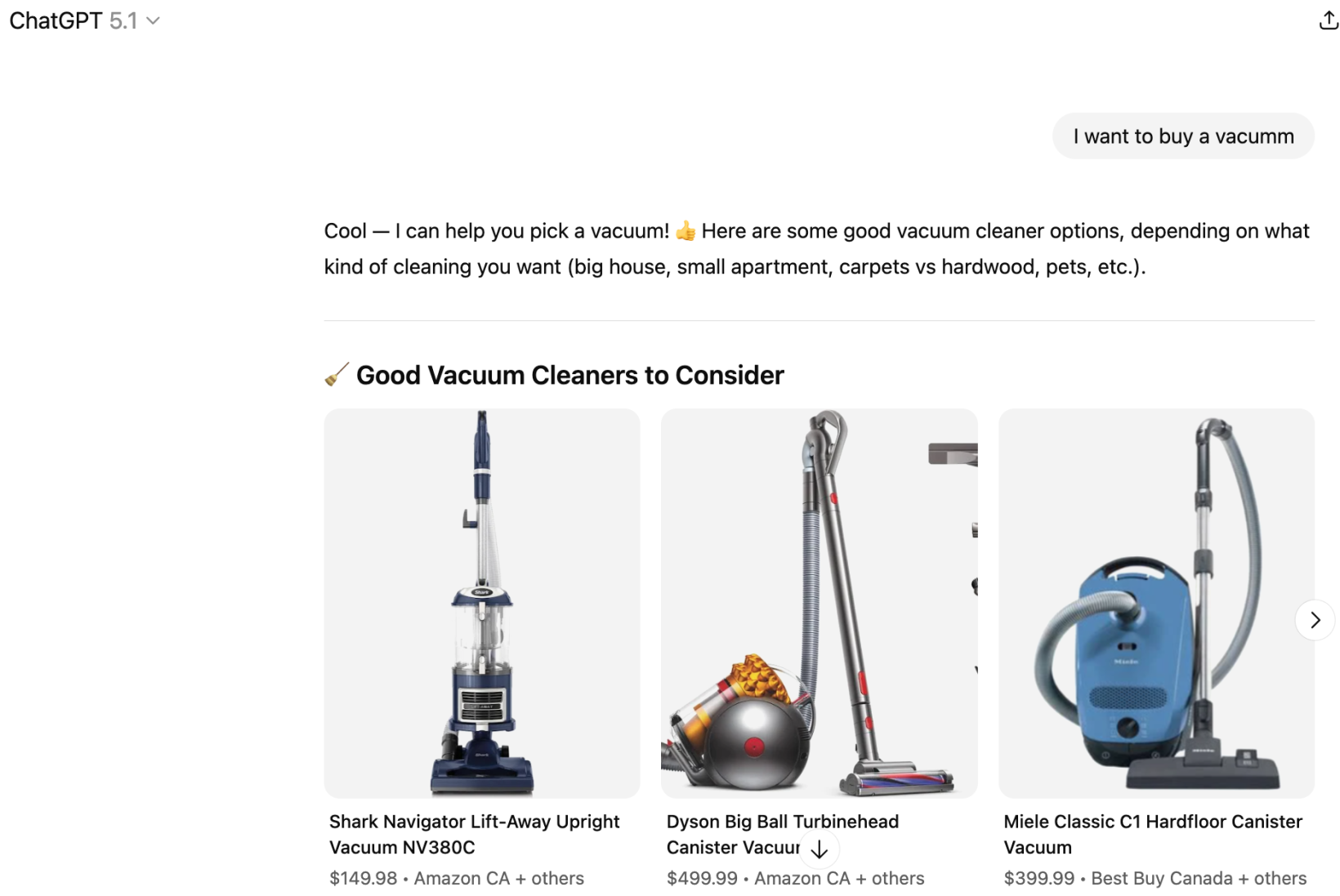
While this experience was efficient, it felt like a step backwards. It reflected the “keyword search” experience of Web 2.0 rather than the “intent-based” promise of GenAI. It responded to my request, but it deprived me of intelligence.
When “research” becomes a filter
As I scrolled down, I addressed the new feature in a call to action: “Research the best vacuum cleaners.”
This is where the points of friction in the user experience (UX) became most obvious. Instead of synthesizing data or comparing technical specifications in a chat format, the tool provided a survey interface to filter results.

The experience is strangely time-sensitive; If you stop for too long to think or drink water, the screens keep jumping and you end up back in a list of product cards.
The interface presents products with a binary choice: “More of this” or “Not interested”. It offers brand names and price tags, but virtually no information to actually help the user make a choice.
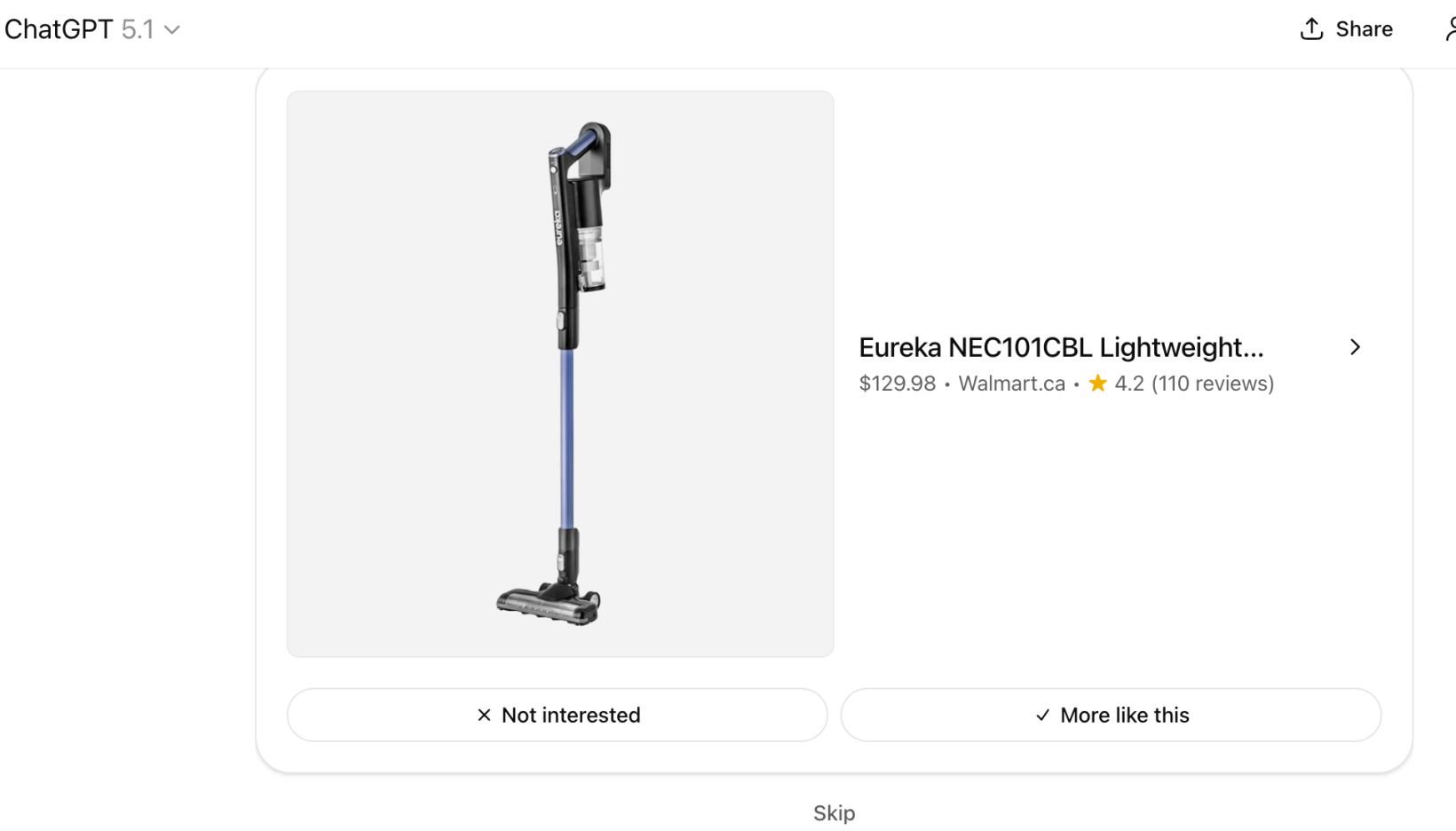
For a user looking for real research, being presented with a list of brands and prices without in-depth comparative analysis feels like a missed opportunity.
The question arises: If I wanted to filter products by price and brand, wouldn’t I use a traditional retailer? Gen AI’s value proposition should be a synthesis, not just an aggregation.
The tension between reasoning and revenue
This update highlights the inevitable tension facing large AI companies: balancing user value and business sustainability.
As OpenAI scales, the pressure to demonstrate revenue models to investors is natural. However, there is a risk in prioritizing transactional features before the core product, reasoning, and logic are fully mature. By introducing a shopping experience that is more like a “click-through” engine than a “knowledge” engine, the platform risks blurring its own identity.
Is ChatGPT a research partner to help me think? Or is it a shopping assistant who wants to take me to the checkout?
A call for “smart” shopping
To be clear: I believe there is a place for shopping within AI. But execution counts.
A truly generative AI shopping experience shouldn’t just list products; the user should understand it. It is important to read between the lines of a request to understand that a user asking for a vacuum cleaner may actually be solving a pet hair or allergy problem.
The current version feels more like a beta test of a business model than an advancement in intelligence. As we move forward, the hope is that OpenAI will refine this tool to prioritize “chat” over transactions. We don’t want it to be just another place to see advertising. We need a better way to make decisions.
About the author
Viviane Mendes is a growth strategist and innovation leader with more than 20 years of experience driving technology-enabled transformation in global markets. She led initiatives integrating AI-driven strategies, digital transformation and scalable business innovation for companies such as PSINet, MP3.com, Match.com, UOL and Best Buy Canada and founded Vitrinepix, one of the first print-on-demand e-commerce platforms, which was later acquired by Spreadshirt. Viviane is committed to lifelong learning and is now focused on applying new technologies to promote digital literacy, responsible AI adoption and positive human impact.

Comments are closed.