
Antimatter propulsion continues to be a good distance off, nevertheless it may change all the pieces

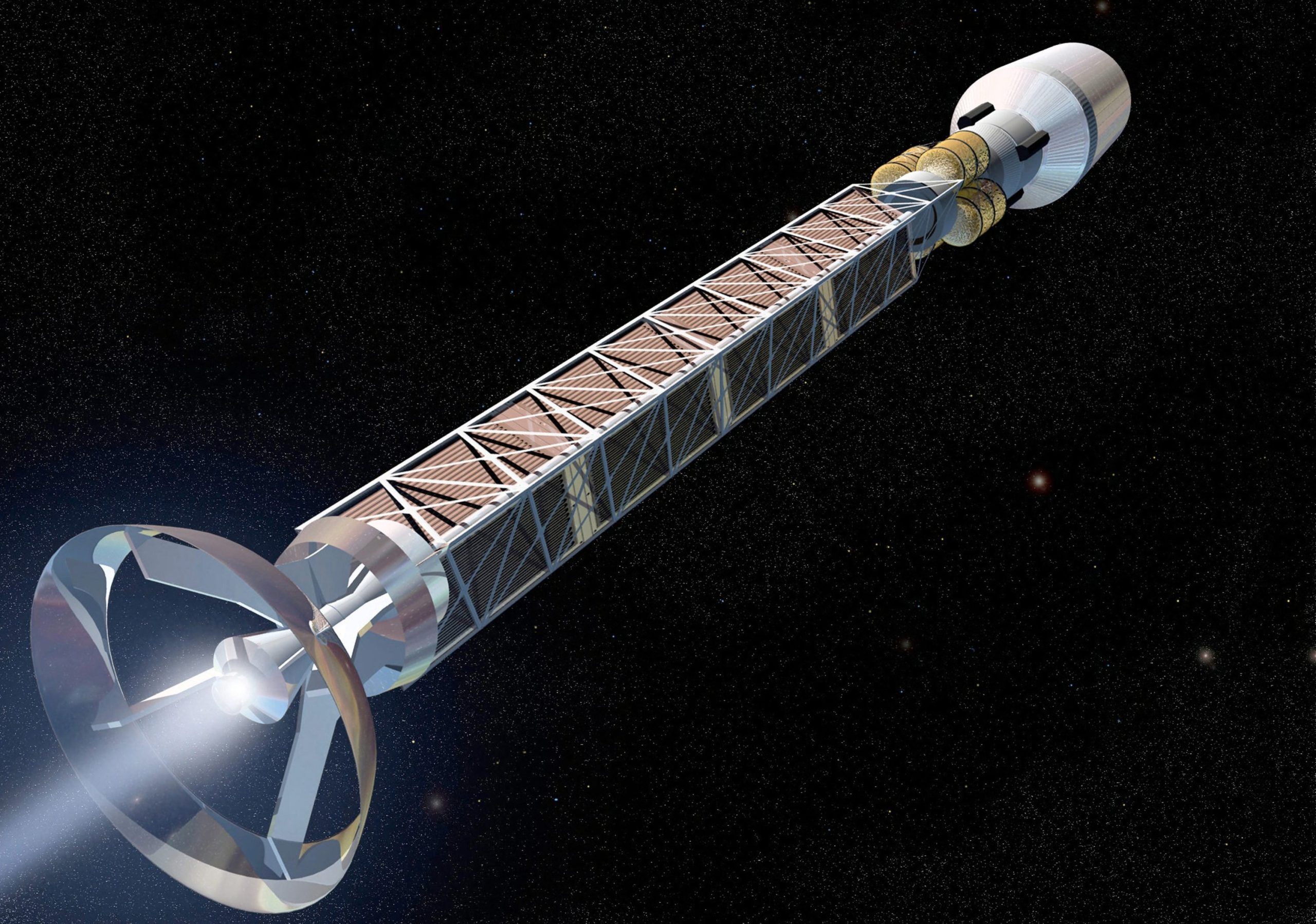
The goal of propulsion research has long been to quickly reach places in space. Rockets, our most common means of doing this, are excellent at delivering great power, but are exceedingly inefficient. Other options such as electric propulsion and solar sailing are efficient but offer paltry amounts of power, albeit for long periods of time. So scientists have long dreamed of a third method of propulsion – one that could provide enough power over a long enough period of time to carry out a manned mission to another star in a single human lifetime. And this could theoretically happen with one of the rarest substances in the universe – antimatter.
A new paper by Sawsan Ammar Omira and Abdel Hamid I. Mourad of the United Arab Emirates University looks at the possibilities of developing a space propulsion system using antimatter and the reasons why it is so difficult to produce. Antimatter was first discovered in 1932 when physicist Carl David Anderson observed positrons – the antimatter form of an electron – in cosmic rays by sending them through a cloud chamber. He received the Nobel Prize in Physics in 1936 for his discovery. It took 20 years to create it artificially for the first time.
Since then, antimatter has been attacked and prodded in as many ways as scientists could think of – even literally, but this leads to what antimatter is best known for – self-annihilation. When an antimatter proton comes into contact with protons or neutrons of normal matter, they annihilate each other, releasing a combination of energy (typically in the form of gamma rays) and also high-energy short-lived particles known as pions and kaons. which happen to move at relativistic speeds.
So, in theory, a ship could contain enough antimatter to intentionally trigger this annihilation explosion, using the relativistic particles as a form of thrust and possibly the gamma rays as a source of energy. The total amount of energy released when one gram of antiprotons is destroyed is 1.8×10¹⁴, 11 orders of magnitude more energy than rocket fuel and even 100 times higher energy density than a nuclear fission or fusion reactor. The paper states: “One gram of antihydrogen could ideally power 23 space shuttles.”
All of this begs the question: why don't we have these fantastic propulsion systems yet? The simple answer is that antimatter is difficult to work with. Since it annihilates itself along with everything it touches, it must be suspended in an advanced electromagnetic containment field. The longest scientists have managed to do this was about 16 minutes at CERN in 2016, and even that was just a few atoms – not the grams or kilograms needed to support an interstellar propulsion system.
Additionally, creating antimatter requires an incredible amount of energy, making it expensive. The Antiproton Decelerator, a massive particle accelerator at CERN, produces about ten nanograms of antiprotons per year and costs several million dollars. Extrapolated, producing one gram of antimatter would require about 25 million kWh of energy – enough to power a small city for a year. Plus, at average electricity rates, it would cost over $4 million, making it one of the most expensive materials on Earth.
Fraser discusses techniques for protecting relativistic ships (e.g. those with antimatter propulsion) from dust in the interstellar medium.
Given these costs and the enormous scale of the infrastructure required, antimatter research is relatively limited. About 100-125 papers are written per year on this topic, a dramatic increase from about 25 in 2000. However, this compares to about 1,000 papers per year on large language models, one of the more popular forms of algorithms driving the current AI boom . In other words, the total cost and the relative long-term horizon of a payout limit the amount of funding and thus the progress in producing and storing antimatter.
This means it will probably be some time before we have antimatter ship propulsion. We may even need to develop some interim energy production technologies like fusion, which could significantly reduce the cost of energy and even enable the research that would ultimately get us there. However, the ability to travel at near-relativistic speeds and potentially transport actual humans to another star within a single lifetime is an ambitious goal that space and exploration enthusiasts around the world will continue to pursue, no matter how long it takes.
Learn more:
Sawsan Ammar Omira & Abdel Hamid I. Mourad – Future of antimatter production, storage, control and annihilation applications in propulsion technologies
UT – It's official, antimatter falls down in gravity, not up
UT – Are there antimatter galaxies?
UT – Spectrum of antimatter observed for the first time
Mission statement:
Artistic conception of an antimatter missile system.
Image credit: NASA/MFSC
Like this:
Load…

Comments are closed.