

Guest essay by Eric Worrall
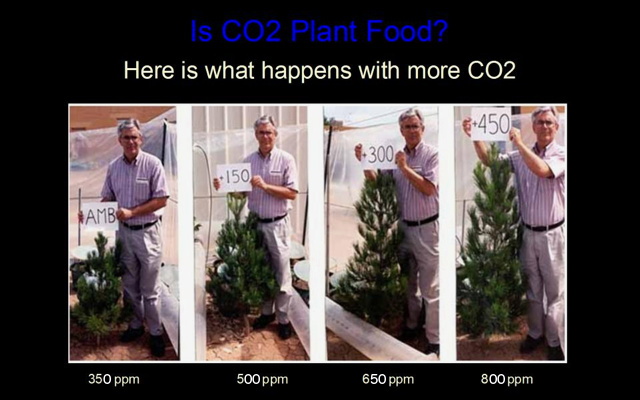
As real-world observations suggest that deserts are shrinking, likely due to the increasing drought-resistance of CO2, a new model-based study has presented a dire prediction of future widespread hunger, particularly in Asia.
Third of global food production endangered by climate crisis
In food-growing areas, rainfall and temperatures will change drastically if global warming continues at the current rate
Fiona Harvey
Environmental correspondent
Sa 15 May 2021 02.28 AEST
A third of global food production will be at risk by the end of the century if greenhouse gas emissions continue to rise at their current rate, according to new research.
In many of the world’s major food-growing areas, temperatures will rise and rainfall patterns will change drastically as temperatures rise by around 3.7 ° C. The forecast increases if emissions remain high.
Researchers at Aalto University in Finland have calculated that around 95% of current crop production takes place in what they define as “safe climatic space” or in conditions where temperature, rainfall and drought are within certain limits.
If temperatures rose 3.7 ° C or so by the end of the century, that safe area would shrink dramatically, affecting mainly South and Southeast Asia and the Sudano-Sahelian zone of Africa, according to a published Friday in One Earth magazine Items.
…
Read more: https://www.theguardian.com/environment/2021/may/14/third-of-global-food-production-at-risk-from-climate-crisis
The abstract of the study;
Climate change could displace a third of global food production from the safe climate zone
Matti Kummu, Matias Heino, Maija Taka, Olli Varis and Daniel Viviroli
Open access
Published: May 14, 2021
Food production on our planet is mainly based on agricultural practices developed under stable Holocene climates. While it is widely recognized that climate change disrupts these conditions, there is no systematic understanding of where and how the greatest risks for entering into unprecedented conditions can occur. Here we close this gap by introducing the concept of the Safe Climate Space (SCS), which takes into account the crucial climatic factors of agricultural production: precipitation, temperature and drought. We show that rapid and unrestrained growth in greenhouse gas emissions (SSP5–8.5) by 2081–2100 could force 31% of the world’s food harvest and 34% of animal production beyond the SCS. The areas most at risk are South and Southeast Asia as well as the Sudano-Sahelian zone of Africa, which show little resistance to these changes. Our results underscore the importance of a low-emission scenario (SSP1–2.6), according to which the extent of food production would be only a fraction under unprecedented conditions.
Read more: https://www.cell.com/one-earth/fulltext/S2590-3322(21)00236-0
How do you say “I’m calling BS” in Finnish?
Even if precipitation patterns worsened in some areas, I’m pretty sure that 80 years of technological advancement would provide a solution, maybe a line of nuclear fusion or thorium reactor desalination devices, or some technology we can’t even imagine at the time.
Of course, it is doubtful that such widespread deterioration in growing conditions will occur. Decades of satellite observations suggest that the deserts are shrinking. Therefore, model claims that global warming is causing deserts to grow in my opinion are highly suspect.
Like this:
Loading…

Comments are closed.