

Federal Reserve officials were divided over cutting interest rates during their October meeting and divided over whether a stagnant labor market or stubborn inflation posed greater economic threats, according to minutes released Wednesday.
While the Federal Open Market Committee agreed to a cut at the meeting, the path forward looks less certain. The disagreement also extended to the outlook for December, with officials expressing skepticism about the need for an additional cut that markets had widely expected and “many” saying no further cuts would be needed, at least in 2025.
“Several participants believed that a further reduction in the target range for the federal funds rate in December might well be appropriate if the economy performed roughly as they expected in the coming transition period,” the minutes said. “Many participants felt that, given their economic outlook, it would probably be appropriate to keep the target range unchanged for the remainder of the year.”
In Fed parlance, “many” is more than “several,” suggesting a rejection of a rate cut in December. However, “participants” do not mean voters. There are 19 participants in the meeting, but only 12 vote. It is therefore unclear what the mood of voting members is for a move in December.
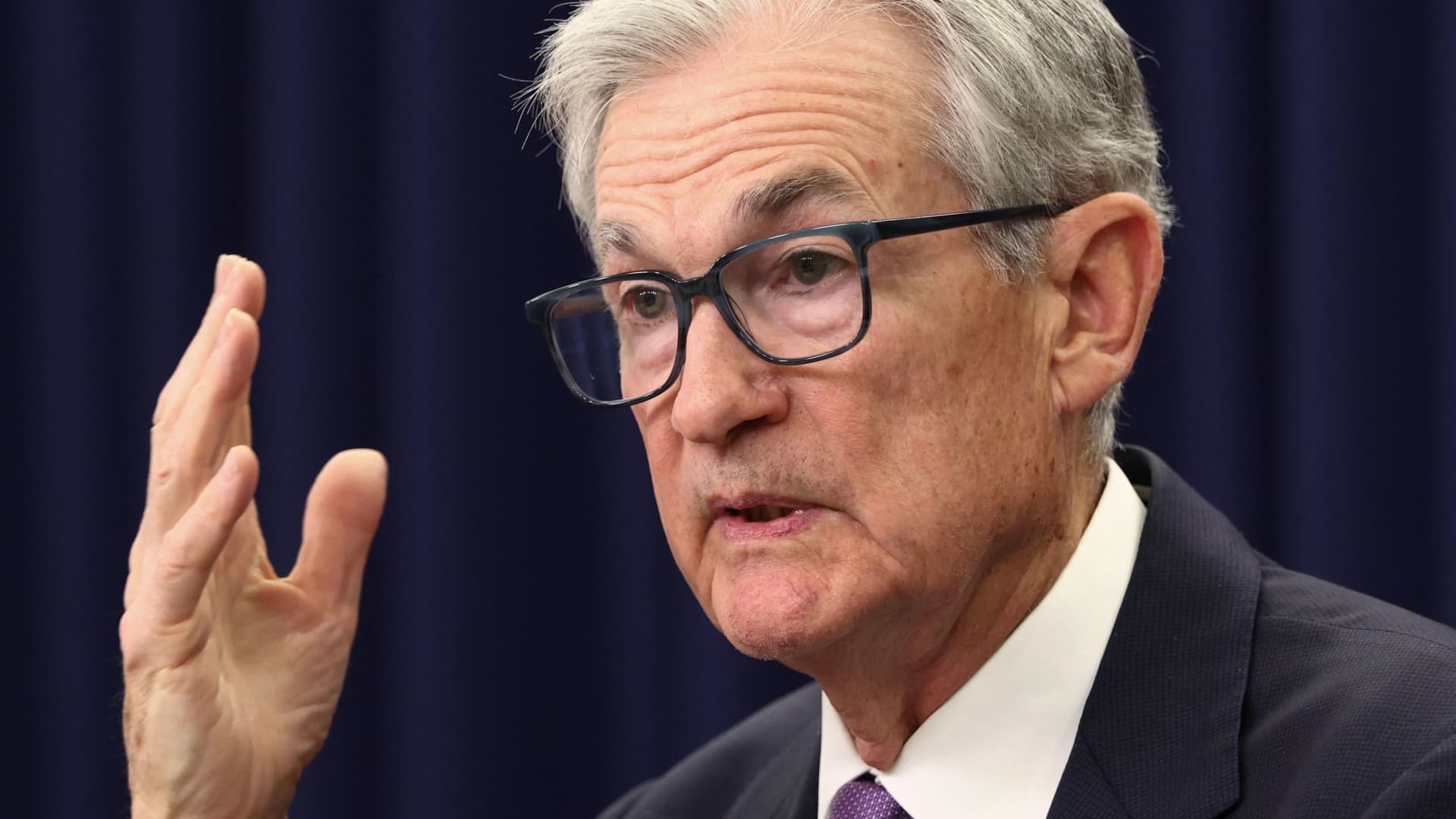
However, the notation is consistent with a statement made at Fed Chair Jerome Powell’s post-meeting press conference. Powell told reporters that a December cut was not a “foregone conclusion.”
“In discussing the near-term stance of monetary policy, participants expressed very different views on which policy decision would most likely be appropriate at the December meeting of the Committee,” the minutes said.
Before Powell’s statement, traders had priced in a near-certain probability of another move during the Dec. 9-10 session. That chance was about 1 in 3 as of Wednesday afternoon, according to CME Group’s FedWatch measure of futures prices. The odds of a cut in January are about 66%.
However, the minutes noted that “most participants” expected further cuts to be likely in the future, although not necessarily in December.
Ultimately, the FOMC approved a quarter percentage point cut in the federal funds rate to a range of 3.75% to 4%. But the 10-2 vote didn’t show how divided officials were at an institution not widely known for its dissent.
Officials expressed broad concerns about a slowing labor market and inflation that has shown “little sign of a sustained return” to the Fed’s 2 percent target. The minutes reflected several camps within the committee.
“Against this background, many participants at this meeting were in favor of lowering the target range for the key interest rate, some supported such a decision, but could also have supported maintaining the target range, and some spoke out against lowering the target range,” the minutes say.
At the heart of the debate was the disagreement over how “restrictive” current policies are for the economy. Some participants believed that despite the quarter-point cut, the policy was still holding back growth, while others believed that “the resilience of economic activity” suggested the policy was not restrictive.
According to public comments, the panel is split between inflation doves, including Govs. Stephen Miran, Christopher Waller and Michelle Bowman, who favor cuts to stave off weakness in the labor market. On the other side are more hawkish members like regional presidents Jeffrey Schmid of Kansas City, Susan Collins of Boston and Alberto Musalem of St. Louis, who fear further austerity could prevent the Fed from meeting its 2% inflation target.
In between are moderates like Powell, Vice Chairman Philip Jefferson and New York President John Williams, who favor a patient approach.
The minutes noted that “one participant,” a reference to Miran, favored a more aggressive half-point cut. Schmid also voted “no,” saying he preferred not to cut at all.
Meeting minutes revealed that decision-making was complicated by a lack of government data during the 44-day government shutdown. Reports on the labor market, inflation and a host of other metrics were neither compiled nor published during the impasse. Government agencies such as the Bureau of Labor Statistics and the Bureau of Economic Analysis have announced schedules for some of the releases, but not all.
Powell likened the situation to “driving in fog,” although Waller rejected that comparison on Monday, saying the Fed has plenty of data to formulate its policy.
The minutes also discussed the accounting aspect of the policy. The FOMC agreed in December to halt the deleveraging of Treasuries and mortgage-backed securities, a process that has resulted in balance sheet savings of more than $2.5 trillion, which is still around $6.6 trillion. There appeared to be broad support for stopping the quantitative tightening process.

Comments are closed.