

The U.S. economy added significantly more jobs than expected in September, according to a long-awaited report from the Bureau of Labor Statistics on Thursday.
Nonfarm payrolls rose by 119,000 this month, compared with the 4,000 jobs lost in August after a downward revision. The Dow Jones consensus estimate for September was 50,000. The July total was also reduced to 72,000, a decrease of 7,000 from the previous release.
In addition to the total number of jobs, the BLS reported that the unemployment rate rose slightly to 4.4%, the highest level since October 2021. A broader measure that includes those who are not looking for a job or working part-time for economic reasons fell slightly to 8%.
Average hourly wages rose 0.2% month-over-month and 3.8% year-over-year, compared to respective forecasts of 0.3% and 3.7%, respectively.
The report ends a labor market data drought that began in early September and continued until the record 44-day government shutdown. Agencies such as the BLS, the Bureau of Economic Analysis and others were prohibited from collecting or sharing data during the reporting period.
This was the first BLS jobs report since the August count was released on September 5. It was also the second since Trump fired then-BLS Commissioner Erika McEntarfer on Aug. 1 after a July jobs report included massive corrections for earlier months.
“The September jobs report shows that the labor market was still resilient before the shutdown and exceeded payroll expectations, but the picture remains cloudy as jobs converted to a job loss in August and the unemployment rate is rising,” said Daniel Zhao, chief economist at jobs website Glassdoor. “These numbers are a snapshot from two months ago and do not reflect where we are now in November.”
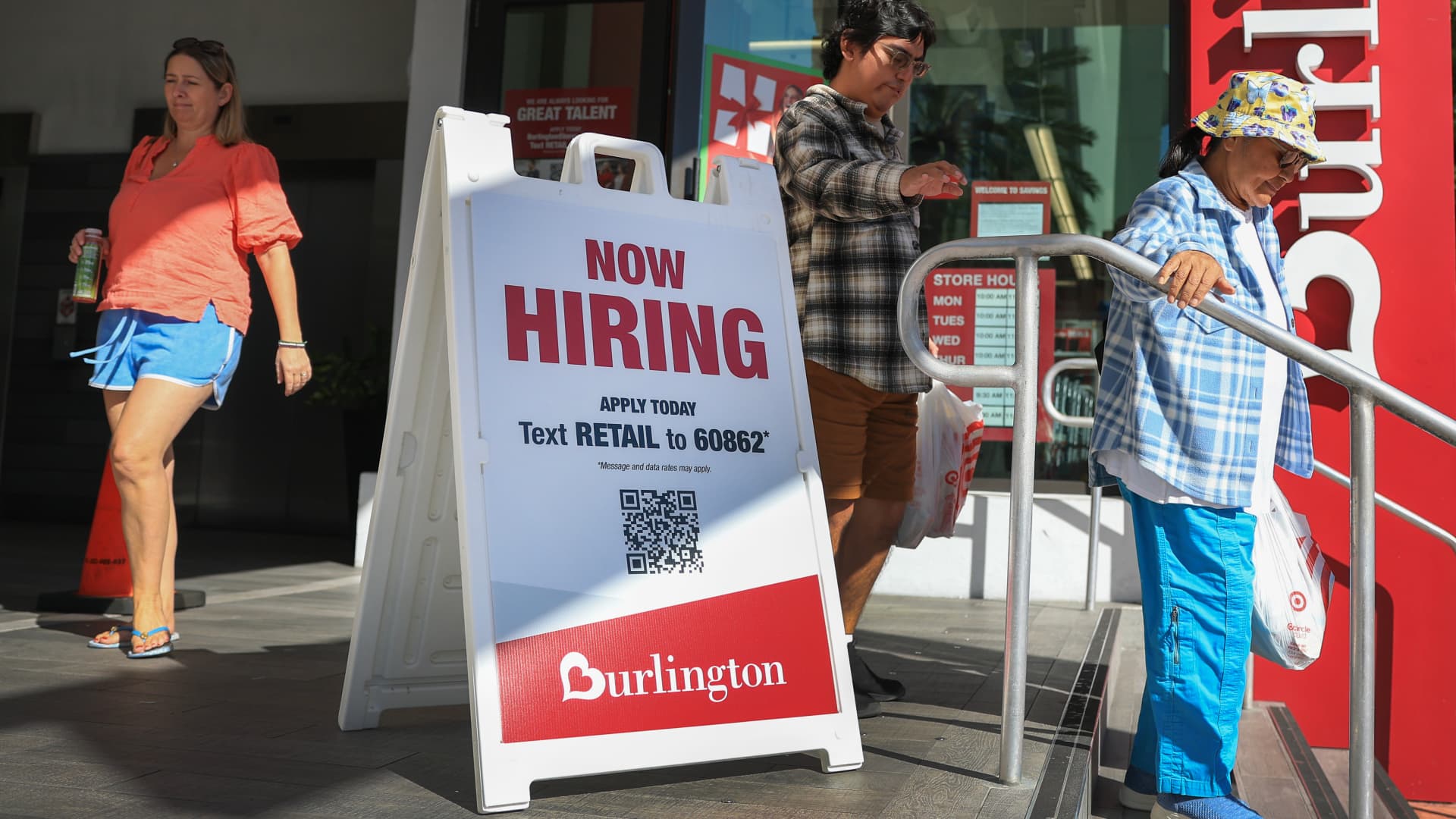
A sign reading “Now Hiring” stands outside the entrance of a department store in Burlington on November 19, 2025 in Miami, Florida.
Joe Raedle | Getty Images
Still, stock market futures added to gains after the report, while Treasury yields were mostly lower.
Traders also continue to bet that the Federal Reserve will not cut interest rates further at its Dec. 9-10 meeting. This is the last jobs report Fed policymakers will receive before then. The hawkish comments at the Fed’s October meeting, reflected in minutes released on Wednesday, added to the general feeling that the central bank will remain on hold until the end of the year.
“While today’s jobs report is very backward-looking, it moves the markets,” said Seema Shah, chief global strategist at Principal Asset Management. “Stocks like the fact that payrolls came in higher than expected, suggesting the economy is still on solid footing, while the bond market is enjoying the rise in unemployment and slowing wage growth, which could keep the case for a Fed rate cut in December all but alive.”
Overall, the report shows that the labor market entered the fall months in much the same state as it has been all year – at a slow but steady pace, with companies both wary of hiring large numbers of new workers and laying off existing ones during a period of unusual economic volatility fueled by aggressive policies in President Donald Trump’s White House.
According to a separate Labor Department release Thursday, initial jobless claims totaled 220,000 in the week ended Nov. 15, down 8,000 from the previous period and below the consensus forecast of 227,000.
September’s employment gains came from familiar sources, with health care leading the way with 43,000 jobs, about right on target at its pace over the past year. Bars and restaurants contributed 37,000 while welfare contributed 14,000.
On the other hand, transportation and warehousing lost 25,000 jobs and the federal government, which had been a major contributor to job growth, lost 3,000 jobs, part of a calendar year loss of 97,000. Professional and business services also saw a decline of 20,000, driven by a decline of 16,000 in temporary employment.
The household survey used to calculate the unemployment rate painted an even more positive picture of the labor market.
The total number of employed people rose by 251,000, and the working population rose by 470,000 to a new record of 171.2 million. The labor force participation rate, which measures the share of the working-age population that is either working or looking for work, rose slightly to 62.4, the highest level since May.
The number of full-time employees increased by 673,000, while the number of part-time employees decreased by 573,000.
The lack of comprehensive indicators posed a challenge for Fed officials, who cut their key interest rate in both September and October but faced a more difficult decision in December. Officials at the October meeting noted that it was difficult to manage policy without the usual set of economic metrics to rely on, and there was a clear tendency to forego a cut in December, according to meeting minutes released Wednesday.
With the release of September payroll reports, the BLS is preparing for the first influx of additional data in the coming months. The bureau announced Wednesday that it would release employment data for October and November simultaneously on Dec. 16. The October figures do not include the usual calculation of the unemployment rate, as this comes from a survey of households that cannot be completed due to the shutdown.

Comments are closed.