

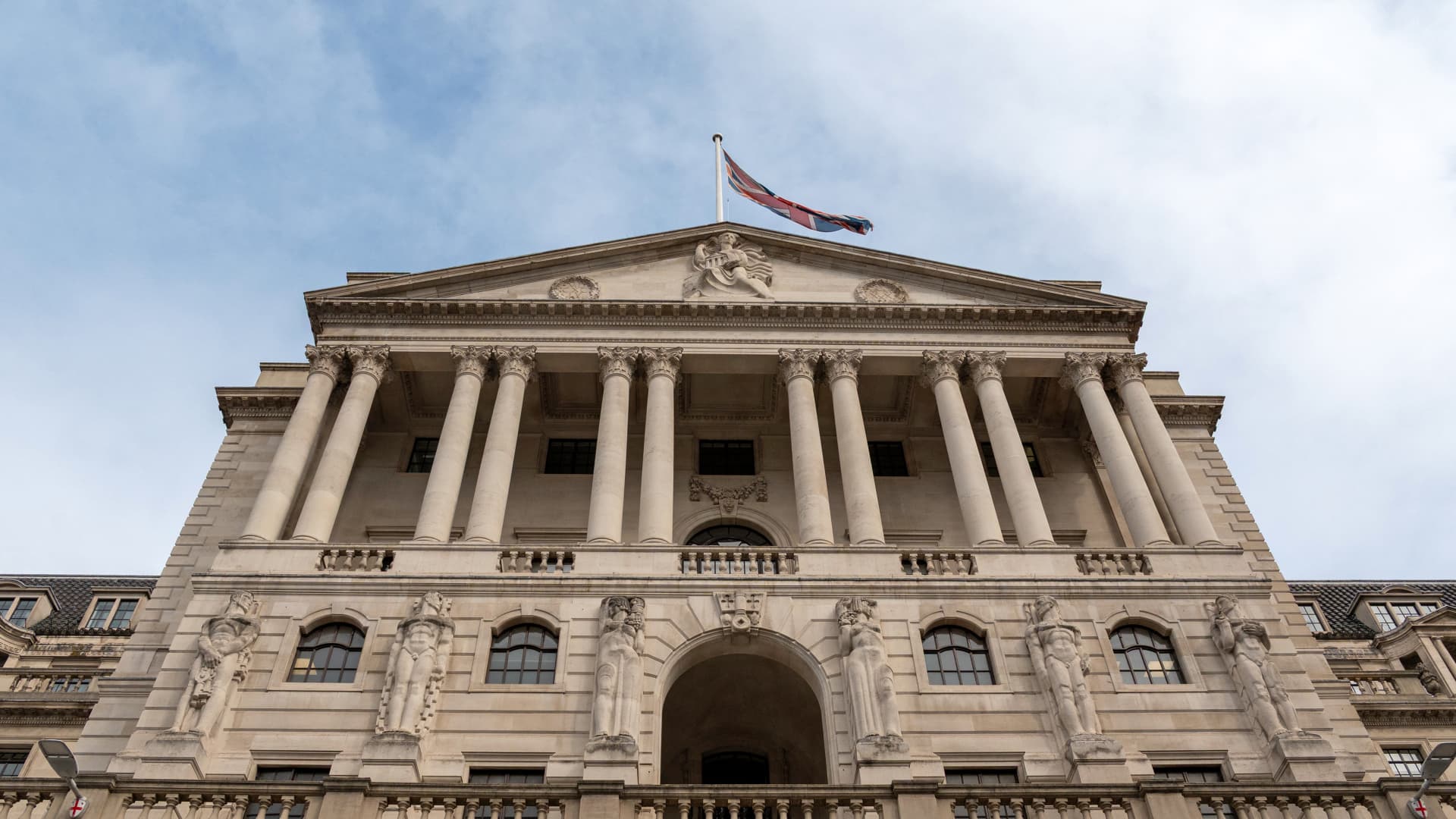
A Union flag flies from a pole on the Bank of England in the City of London on August 7, 2025.
Niklas Halle’n | Afp | Getty Images
LONDON – The Bank of England will make its final interest rate decision on Thursday before the autumn budget later this month. Economists say that while it is more likely that the central bank will keep interest rates stable, it is not a given.
“We can never know for sure which way a meeting will go, but this is … one of the most difficult in some time,” Dean Turner, chief euro zone and U.K. economist at UBS Global Wealth Management’s chief investment office, said on Tuesday.
“It’s not a question of whether they will cut interest rates at some point – the answer to that is yes, we think they will… If policy is tight, inflation is falling and growth is weak, interest rates will go down. The hard thing is predicting when,” he added.
Economists largely expect that the majority of the BOE’s nine-member Monetary Policy Committee (MPC) will vote to keep the key interest rate, known as the bank rate, unchanged at 4% at its November meeting.
However, there are some dissenters, including Barclays, Nomura, Mizuho and Unicredit, who believe there could be a surprise cut to 3.75% today. Julien Lafargue, chief market strategist at Barclays Private Bank, acknowledged Tuesday that while there was a case for a rate cut this month, it was “a very balanced decision.”
In any case, the general consensus is that rate setters could cut rates as early as December and will cut rates again next year in response to the expected slowdown in inflation – which remained unchanged at 3.8% for the third straight month in September – and a weakening in labor market data.
Most MPC members are more concerned about the impact of cutting rates too quickly rather than too slowly, Oxford Economics noted in the analysis, and the BOE will want to see evidence of continued downside surprises in the data and a slowing of wage growth to a pace consistent with targets before voting to cut again.
“If we are right and the BOE pauses [this] Next week, the question will turn to when the next cut will occur,” Allan Monks, chief UK economist at JP Morgan, said in a note.
“We have argued that further downside surprises in inflation and labor market data will determine this. For example, a rise in the unemployment rate to 4.9% in September could be significant, as could further modest sequential increases in core CPI services and private wages.”
Assuming the BOE keeps rates on hold on Thursday, UBS’s Turner expects the central bank will then “signal that a cut will come no later than February – perhaps as early as December.”
“Policymakers will not be armed with new forecasts in December, but they will have the budget and impact assessment in their pockets,” he said.
Fall budget
The fact that this month’s central bank meeting comes ahead of the upcoming fall budget on November 26 is another reason for BOE policymakers to pause.
Chancellor Rachel Reeves is widely expected to announce tax hikes to fill a fiscal black hole estimated to be between 20 billion pounds and 50 billion pounds ($20 billion and $65.2 billion), based on assumed forecasts of lower productivity, debt service and the cost of a U-turn on social spending cuts, among other things.
Earlier this week, Reeves gave clearer indications that tax increases are coming and whether she is likely to consider increasing the income tax as a way to raise revenue, but she did not provide further details. Tax increases would likely act as a further inflation dampener by reducing consumer demand.
“If the measures [in the budget] An increase in income tax would result in a greater burden on real household incomes due to high inflation and slower wage growth. As these factors weigh on demand, inflation is likely to ease,” Berenberg economist Andrew Wishart said in a note Friday.
“If so, this would allow the Bank of England to cut interest rates by 25 basis points to 3.50% at least twice next year. Bringing forward fiscal tightening would open the door to a third cut in 2026 to 3.25%,” he added.

Comments are closed.