

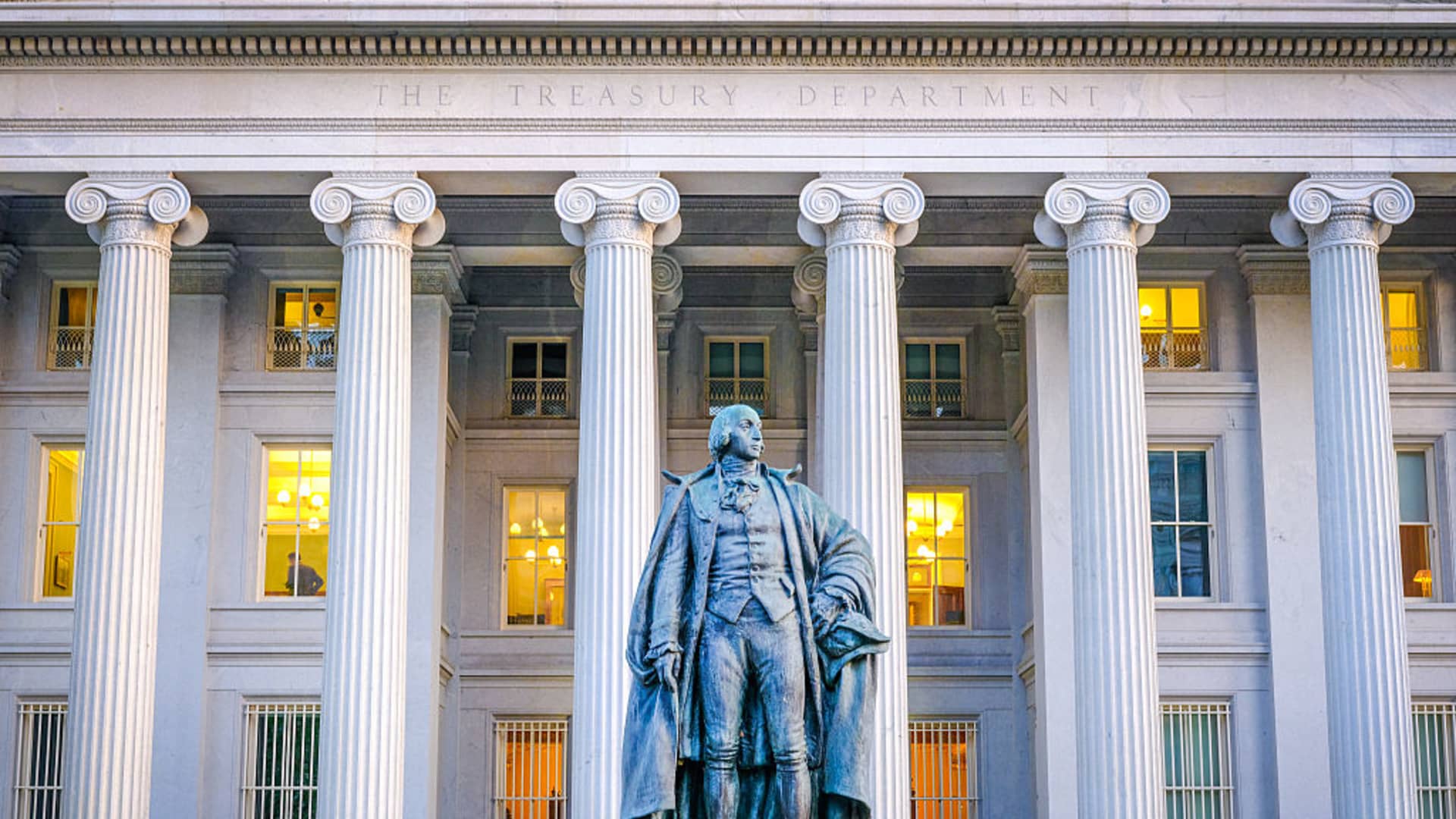
The statue of former Treasury Secretary Albert Gallatin stands in front of the north wing of the U.S. Treasury Department headquarters building in Washington, DC, USA on April 24, 2025
J. David Ake | Getty Images News | Getty Images
The U.S. budget deficit narrowed slightly in 2025 as record tariff revenues helped offset also unprecedented payments on the rising national debt, the Treasury Department announced Thursday.
In a year marked by a fierce trade war and high financing costs, the federal government managed to escape with a deficit of $1.78 trillion, about $41 billion, or 2.2%, less than the fiscal year 2024.
While this is still on the high end historically, the red numbers would have been even worse had it not been for a massive increase in tariffs and a September surplus of $198 billion, which was also a record for the month.
President Donald Trump’s tariffs were a major contributor to the $202 billion in tariffs for the year, a 142% increase from 2024. In September, $30 billion in tariffs were paid, up 295% from the same period last year.
Treasury officials estimated Thursday that the decline in the budget deficit will bring the deficit-to-gross domestic product ratio to 5.9%. The value has not been below 6% since 2022 and generally hovers around the 3% range except during periods of economic stress.
In an interview last week, Treasury Secretary Scott Bessent said the Congressional Budget Office estimates the budget deficit will be below 6% of GDP and said “we are on track” to reduce the debt and deficit burden.
The impact of the deficit was felt in the interest paid on the $38 trillion in federal debt.
Interest on the debt totaled more than $1.2 trillion, also a record and nearly $100 billion higher than 2024 spending.
Excluding the interest the Treasury receives on its investments, net interest payments totaled $970 billion, exceeding defense spending by $57 billion and trailing only the cost of Social Security, Medicare and health care in the federal budget.
Earlier this year, Trump imposed controversial tariffs on U.S. imports despite protests that they would drive up inflation and hurt consumers, leading to lower demand and hurting economic growth.
While there were signs of price increases for tariff-related items, the moves were largely gradual. Federal Reserve officials say they are likely to cut their key interest rate even further, anticipating price increases will be temporary. The current key interest rate is 4.00% to 4.25%.
The government’s fiscal year ended in September. The U.S. earned $5.2 trillion in revenue and spent just over $7 trillion in the previous 12 months.

Comments are closed.