

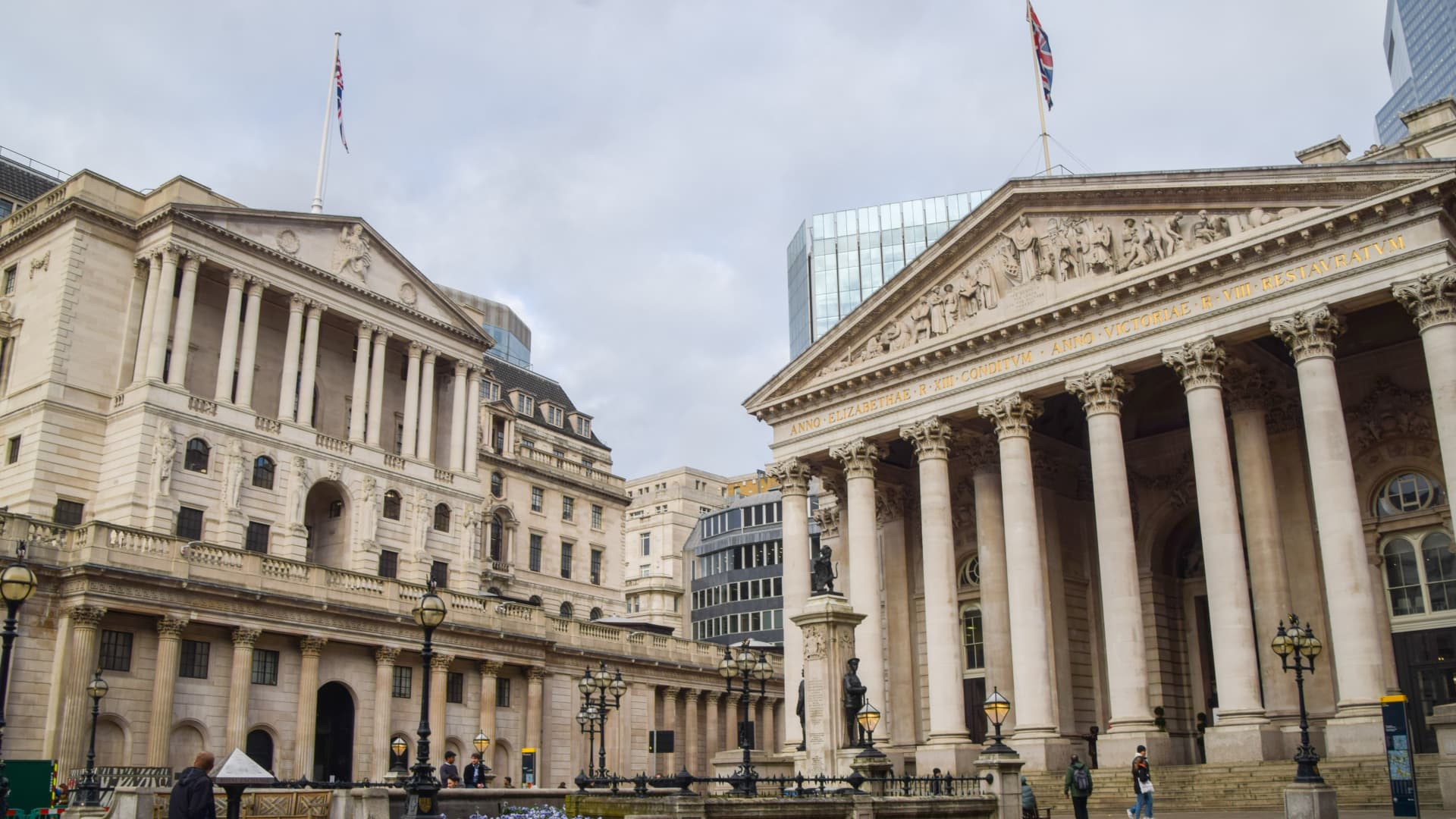
The Royal Exchange and the Bank of England.
SOPA Images / Contributor / Getty Images
Data from the Office of National Statistics (ONS) showed on Thursday that the UK economy grew at a weak pace of 0.1% in November. This data is fueling expectations that the Bank of England will cut interest rates next month.
The latest data compares with economists polled by Reuters expected 0.2% month-on-month growth.
Monthly real gross domestic product (GDP) fell 0.1% in October, following a 0.1% decline in September and growth of 0.2% in August.
The ONS said the slight growth in economic output in November was largely due to growth in the services sector. The data may be thin, but it is the first sign of life across the UK economy in three months.
British Chancellor Rachel Reeves said in a statement after the data was released on Thursday that she was “determined to go further and faster to boost economic growth.”
“That means generating investment, driving forward reform and working tirelessly to eliminate waste in public spending, and today I will press regulators on what more they can do to deliver growth,” she said in via Treasury Department comments sent via email.
Still, the ONS said real GDP was expected to show no growth in the three months to November compared to the three months to August.
“The services sector recorded no growth in the three-month period, while manufacturing fell by 0.7% and construction increased by 0.2%,” the ONS said in the data release.
The British pound After the GDP release, which comes as the Bank of England considers cutting interest rates at its next meeting on February 6, it fell 0.2% against the dollar to trade at $1.2214 .
Economists say the latest data only strengthens the case for a rate cut next month, although BOE policymakers will factor in inflationary pressures, such as robust wage growth and uncertainty over Britain's economic outlook. The central bank's inflation target is 2%.
“Together with weaker-than-expected CPI inflation pressures in December, today's release showed that the economy continued to lack momentum towards the end of last year, leaving us comfortable with our view that the Bank of England will keep interest rates at 4.75 % to 4.50% in February,” Ashley Webb, British economist at Capital Economics, said in an email.
Work under pressure
The Labor government and Treasury have been under pressure in recent weeks due to rising government borrowing costs, questions about their financial plans and a higher tax burden on businesses.
However, both were given some relief on Wednesday when the latest inflation data showed that consumer price growth cooled more than expected to 2.5% in December and core price growth continued to slow.
The reading was below expectations from economists polled by Reuters, who had expected inflation to remain unchanged from November's 2.6% reading.
Core inflation, which excludes more volatile food and energy prices, was 3.2% in the 12 months to December, compared with 3.5% in November.
The UK inflation rate hit 1.7% in September, its lowest level in more than three years, but monthly prices had risen since then due to higher fuel costs and the price of services. In December, the annual inflation rate in the services sector was 4.4%, compared to 5% in November.
The British economy has been in a difficult situation recently. Economists expressed concern about the country's sluggish growth prospects and worries about headwinds caused by both external factors, such as possible trade tariffs once President-elect Donald Trump takes office on January 20, along with internal fiscal and economic challenges , which have weighed on the Labor government and the Treasury since the October Budget.
“The near stagnation of GDP in November has dampened the optimism sparked by yesterday's unexpected decline in inflation. Meanwhile, the widening trade deficit highlights the ongoing challenges facing British businesses as they grapple with an increasingly complex global landscape,” said Samuel Edwards, head of The Dealer, which is busy with global financial services firm Ebury, said in a statement Comment via email on Thursday.
“The new US administration brings both opportunities and challenges. While uncertainty over policy direction remains, there is optimism that closer trading ties could unlock significant potential in one of the UK's largest markets,” he noted.
Edwards noted that the government's efforts to strengthen ties with the EU and China “reflect a clear strategy to diversify export opportunities and improve long-term economic resilience.”
Correction: The headline of this article has been updated to reflect that the UK economy grew by 0.1% in November. The number was incorrect in an earlier version.

Comments are closed.