

A big part of the reason it took Range Rover so long to develop its first electric SUV is that the automaker wants the next-generation electric vehicle to stay true to its roots first and foremost.
“The electric Range Rover has to be a Range Rover first,” Lennard Hoonik, COO of parent company JLR, told Motortrend last summer.
For this to succeed, the electric vehicle must be able to do everything that current Range Rovers can do. Firstly, it must live up to the brand's reputation for off-road capability, including in deep water, and withstand extreme temperatures.
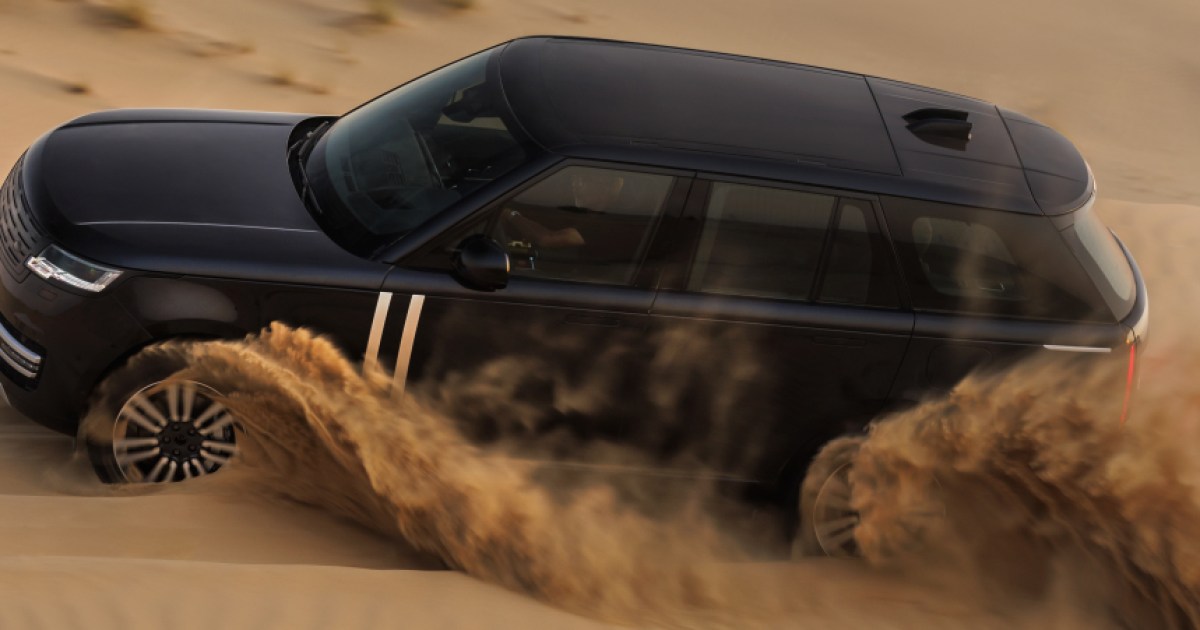
For the latter reason, the electric SUV is currently being tested in hot weather in the United Arab Emirates, where temperatures can reach over 120 degrees Fahrenheit.
“Range Rover Electric prototypes are currently in one of the harshest climates in the world and are undergoing the most intensive testing a Range Rover has ever undergone,” says JLR.
The SUV is designed to tackle 300-foot-tall sand dunes, with its performance and efficiency put to the “strong test” to ensure its propulsion system remains reliably temperature-controlled. And despite all this, the luxury SUV must continue to offer “maximum comfort in the cabin for the customer”.
JLR says the electric SUV's performance is currently “outstanding” at this stage of development, ahead of customer reservations in 2025. Last month, JLR said there had already been 48,000 pre-orders for the Range Rover Electric.
While many details about the SUV are yet to be revealed, its 8,000-volt architecture promises fast charging times. There is a lot of speculation that it could be a four-motor configuration or one motor for each wheel, similar to Mercedex-Benz's G-Class EV.
And to live up to the Range Rover's luxury reputation, JLR says drivers can customize the SUV to their liking.

Comments are closed.