

Who will win a Grand Prix 2026?
Four circuits are vying for contract extensions, Thailand and South Korea have both submitted bids, while India, Rwanda and numerous other countries are reportedly developing the infrastructure to secure a place on the F1 calendar.
The competition is so fierce that these applications often extend beyond sports. “We're getting calls from prime ministers and governments who really want to host the Grand Prix,” Formula One boss Stefano Domenicali told CNBC's “Inside Track.”
“It’s not political, it’s something really essential.”
However, it is extremely political for countries that could lose their place on the calendar. The Belgian Grand Prix contributes an estimated $248 million to the national economy each year. When the country's prime minister wrote to Domenicali at the end of 2023 to advocate for a contract extension beyond 2025, his message was clear: “You must establish a balanced calendar between Europe, the Far East and America/Middle East,” not to the detriment of Belgium happen.”
But someone is going to have to lose. The Middle East's oil-producing nations see Formula 1 as crucial to their economic diversification and have invested huge sums to secure it. Abu Dhabi, which hosted its first Grand Prix in 2009, spent $40 billion building an artificial island.
“The entire concept of Formula 1 Abu Dhabi [started with] “A blank canvas of Yas Island,” Saif Rashid Al Noaimi, CEO of island management company Ethara, told CNBC.
“There was nothing before the plans for the Abu Dhabi Grand Prix.” In 2023, the island welcomed 34 million visitors.
Saudi Arabia, which was reportedly considering buying Formula 1 outright, also used the sport to boost its appeal as a tourist destination. A 2023 survey conducted by YouGov found that racing fans across the U.S. are more than twice as likely to consider a trip to Saudi Arabia than other Americans.
“Formula 1 doesn't present the race, it presents the city,” Robin Fenwick, CEO of sports marketing agency Right Formula, told CNBC.
“And that’s great for the local economic impact and the lasting legacy it will leave behind.”
Think of Monaco. The streets around the port of Monte Carlo represent glitz, glamor and motorsport. “Some businesses make almost three months’ worth of revenue in four days,” Guy Antognelli, the director general of the Monaco government’s tourism and convention agency, told CNBC.
“But because it coincides with the Cannes Film Festival, the Côte d'Azur is actually the center of the world of media technology at this time.”
But with Monaco currently paying almost a third ($20 million) of what Saudi Arabia has to pay to host a race, Formula 1 may not be willing to extend the country's contract after it expires in 2025. In an interview with Bloomberg earlier this year, McLaren CEO Zak Brown said the sport would survive without Monaco: “You could argue, 'Wait a minute, some of these other venues are doing similar TV ratings, great racing, and financially support a lot more.' contributes to the growth of the sport.' There’s the Miamis, the Vegases, the Singapores – they’re all great races.”
F1 traditionalists would counter that the commercial focus will ultimately come at the expense of the sport. The “dynamic pricing” algorithm that caused four-day grandstand tickets at Silverstone to rise to £600 ($774) in 2024 drew criticism from Formula One legend Lewis Hamilton, who warned against the Prices for families are overrated.
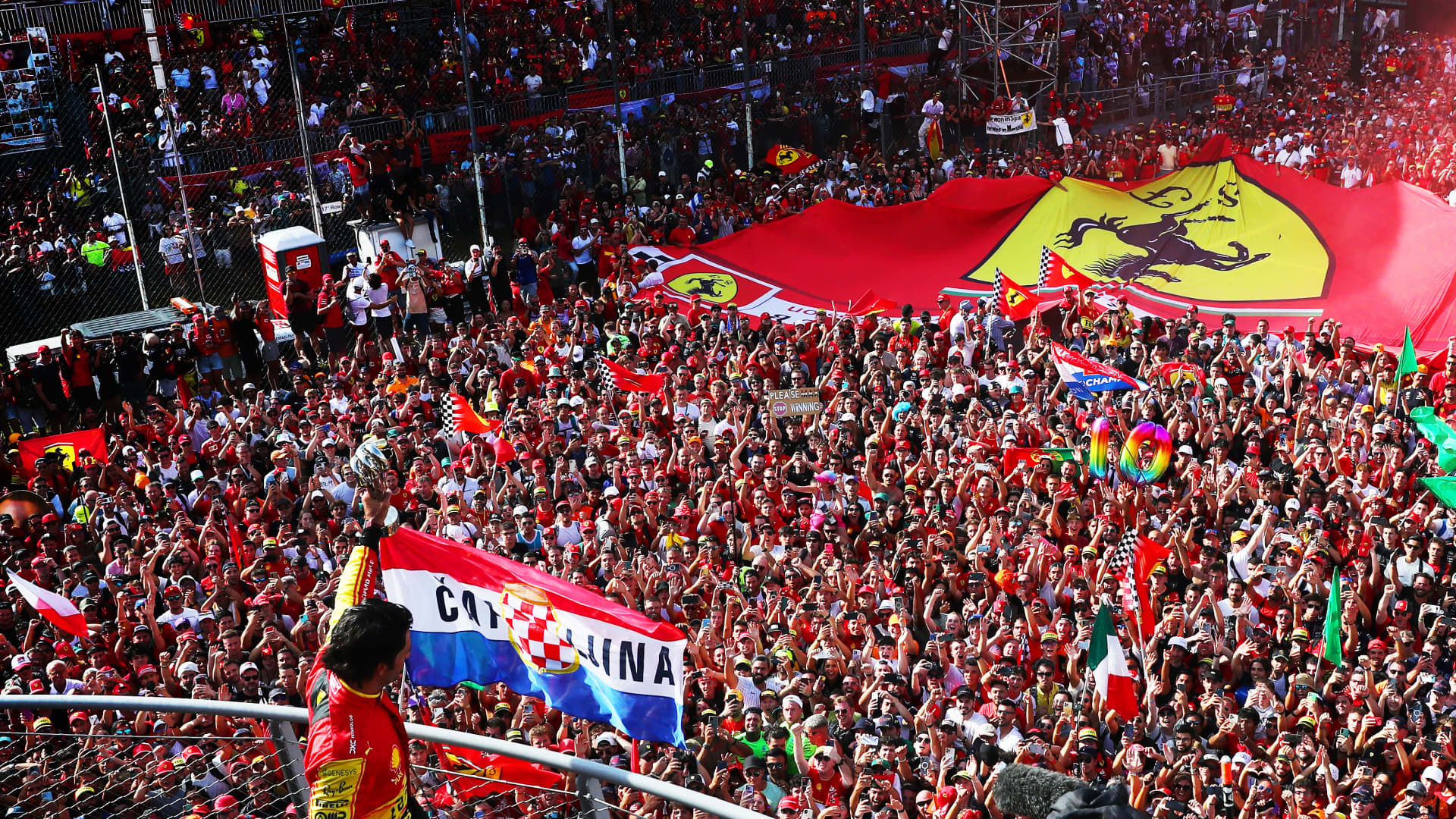
Third placed Carlos Sainz of Spain and Ferrari celebrate on the podium during the F1 Italian Grand Prix at Autodromo Nazionale Monza on September 3, 2023 in Monza, Italy.
Dan Istitene – Formula 1 | Formula 1 | Getty Images
However, much of the price increase is due to the growing popularity of Grand Prix weekends among families. Concerts by global superstars such as Ed Sheeran in Miami and Stormzy in Silverstone have attracted wider audiences to race weekends and pushed Formula 1 further into the mainstream.
Proponents of the “Super Bowl” model point to the $1.2 billion in economic value the Las Vegas Grand Prix added through flights, hotel bookings and restaurant revenue, as well as the infrastructure investments Formula 1 made for the event has made.
“I know how big the economic impact of the American Super Bowl is,” Domenicali told CNBC. “We’re bigger.”
To continue to grow, Formula 1 must draw a fine line between the sport's new audience and its core motorsport fans. This requires careful consideration not only about what new experiences they offer fans, but also what events they remove from the calendar. Like it or not, Formula 1's growing economic influence means that every decision will have a significant impact on someone.

Comments are closed.