

The European Space Agency's Hera spacecraft is en route to follow-up observations of Dimorphos, two years after an earlier probe blasted the mini-asteroid into a different orbit around a larger space rock.
Scientists say the close observations Hera is scheduled to make millions of miles from Earth starting in 2026 will help them protect our planet from future threats from killer asteroids.
“Hera's ability to closely examine its asteroid target will be exactly what is needed for operational planetary defense,” Richard Moissl, who leads ESA's Planetary Defense Office, said in a press release today. “You can imagine a scenario where a reconnaissance mission is quickly dispatched to assess whether further diversionary measures are necessary.”
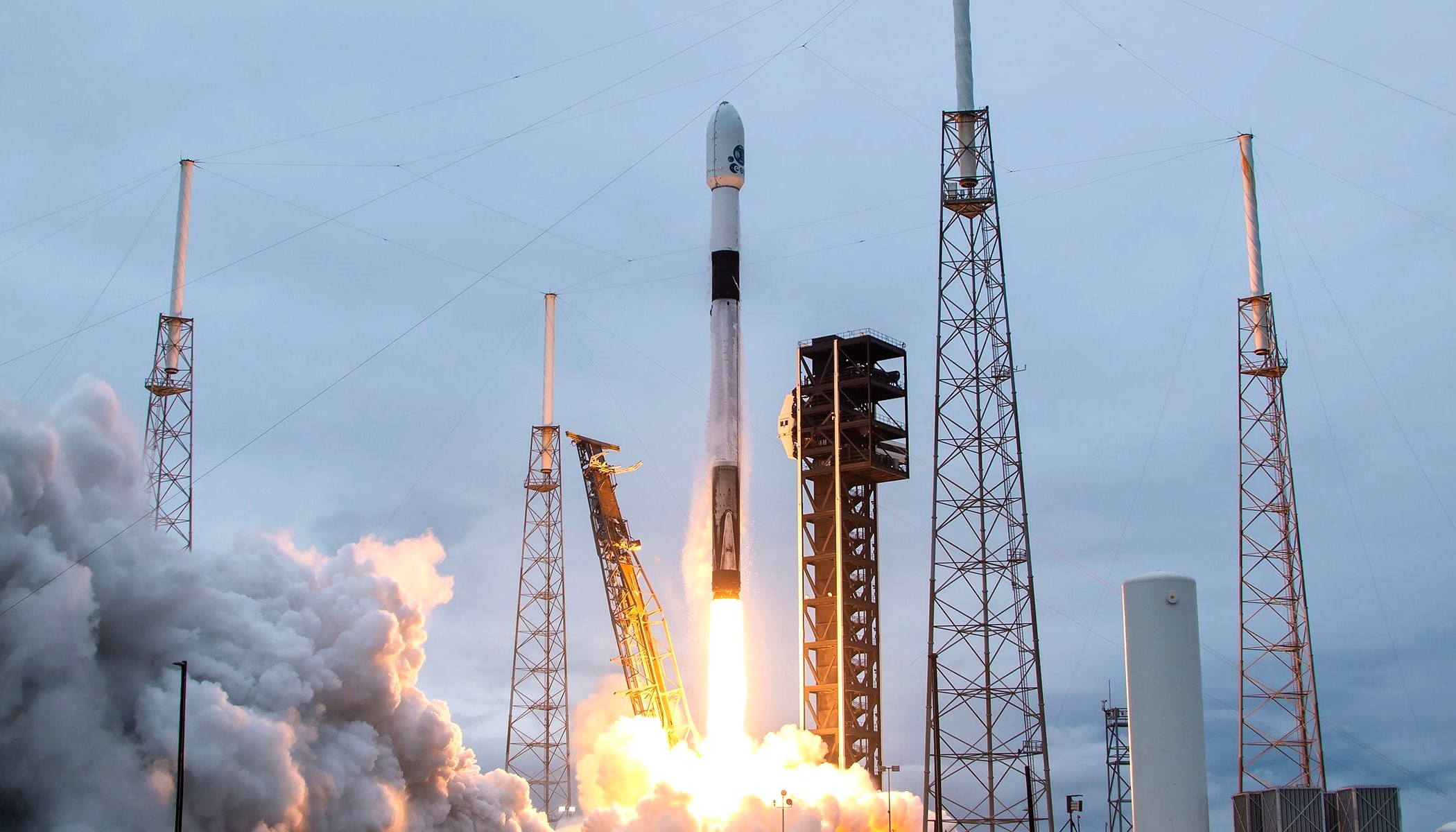
The car-sized probe lifted off from Cape Canaveral Space Force Station in Florida on a SpaceX Falcon 9 rocket at 10:52 a.m. ET (14:52 UTC) today, just as Hurricane Milton approached from the Gulf of Mexico. The day before the start, meteorologists estimated the chances of acceptable weather at just 15 percent. Still, SpaceX persisted.
Due to the requirements of the mission, the first stage booster could not be recovered this time, as is common with Falcon 9 missions. This was the booster's 23rd and final mission. Just over an hour after launch, the rocket's second stage placed Hera on its interplanetary trajectory.
During the spacecraft's two-year journey to Dimorphos, it is expected to perform a series of course-changing maneuvers, including a swing past Mars that will provide an opportunity for observations of Deimos, one of the Red Planet's moons.
Hera returns to the scene of a 2022 cosmic crash between Dimorphos – which is about 530 feet in diameter, or the size of the Great Pyramid in Egypt – and NASA's Double Asteroid Redirection Test (DART) spacecraft.
DART was intentionally sent to collide with Dimorphos to measure the impact of the impact on the asteroid's orbit around a larger asteroid called Didymos. After the crash, scientists found that Dimorphos' orbital period had shortened by 33 minutes, a reduction of about 5%. They also identified a cloud of debris that stretched thousands of kilometers into space.
Hera is expected to conduct a more detailed “accident site investigation” and provide data on the shape and composition of Dimorphos, as well as the properties of the crater created by the collision.
The spacecraft will deploy two nanosatellites to support the study: One of the CubeSats, known as Milani, will study the composition of Dimorphos and the dust surrounding it. Meanwhile, the Juventas mini-satellite will conduct the first subsurface radar probe of an asteroid. In the later stages of its six-month investigation, Hera will test an experimental self-driving mode as it autonomously navigates through Didymos and Dimorphos.
Data on the aftermath of the DART crash will inform plans to divert asteroid orbits if those orbits are ever found to pose a significant risk of collision with Earth. Such strategies may require taking action years before an encounter.
“At the end of the Hera mission, the Didymos pair is expected to be the best-studied asteroid pair in history and will help protect Earth from the threat of incoming asteroids,” said Hera mission scientist Michael Küppers.
Like this:
Load…

Comments are closed.