

The NATO Innovation Fund (NIF) has announced its first investment in quantum technology, leading a seed round of €5 million for Aquark Technologies, a spin-off from the University of Southampton that has developed a unique quantum sensor technology.
Aquark's patented cold atom system can be used as an alternative device for position, navigation and timing (PNT), is independent of satellites and thus immune to external manipulation such as GPS interference.
Get rid of annoying magnetic traps
Aquark describes itself as a miniaturization company, specializing in micro-manufacturing and vacuum technology, but what really sets it apart is the fact that it has found entirely new ways to capture neutral atoms.
Usually, this is done using a so-called magneto-optical trap (MOT), which uses magnetic fields to manipulate atoms. During his PhD, one of the company's co-founders and CEO, Andrei Dragomir, found a way to trap atoms without magnetic fields.

The
The latest gossip from the EU tech scene, a story from our wise old founder Boris and questionable AI art. Free in your inbox every week. Sign up now!
“Basically, we went back to the 1980s and kind of said, 'Hey, there's a better way to do this,'” Alexander Jantzen, co-founder and COO, told TNW. “This allows us to build simpler systems because we don't have to control things like magnetic fields as much.”
The result is systems that are smaller, lighter, cheaper and more energy efficient than existing systems. They are also more robust and can operate in difficult terrain, including in the air and underwater.
While Aquark's technology is applicable across a wide range of quantum domains, the startup has decided to focus on quantum sensing because it currently offers “the fastest returns and the greatest impact.”
“In terms of the variety of things you can do with this technology, timing is the most mature market,” Dragomir told TNW. “It's far from everything we want to accomplish as a company, but it's a good starting point.”
Dual-use as a springboard
It goes without saying that the technology could also be used in defence if NATO is interested. But other sectors that can directly benefit from such infrastructure improvements include data centres, telecommunications and financial transactions, which also rely on highly precise location and time information.
The defense request may have previously made other donors hesitant, but that attitude appears to have evolved along with the geopolitical climate.
“When we started looking for institutional investors, we had a lot of interactions where dual use was taboo for many of them, but that has changed in the last year or so,” Dragomir said.
But the dual-use aspect (applicable for civilian and military purposes) is only part of a strategy to further develop the technology, Jantzen said. “For us, the ultimate focus is on a civilian use case that will drive this forward. We now see a realistic path from this technology in labs to actual use in people's cars and homes, in national infrastructure and all that sort of thing.”
While Aquark's technology hasn't made it into our homes yet, it has made it out of the lab and – in a world first – flown into a drone in the field. And a field in the truest sense of the word, as you can see in the video below.
Europe must work together on quantum technology or it will be left behind
Aquark is also the first DIANA (Defence Accelerator for the North Atlantic) cohort company to receive direct investment from the NIF. Other investors in the round include the Export and Investment Fund of Denmark (EIFD), UKI2S (managed by Future Planet Capital) and rocket developer MBDA. The funds will enable Aquark to further expand and develop its technology – making the company even smaller – and grow its team.
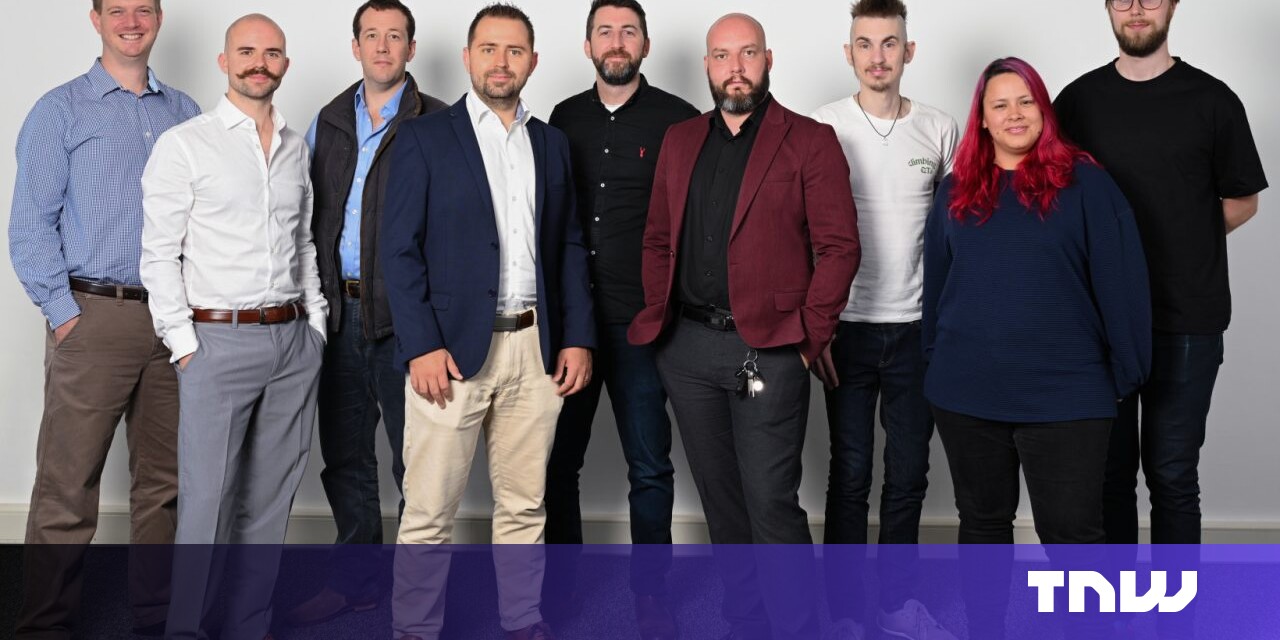
Dragomir is from Romania, Jantzen from Denmark, and the team includes (in addition to some native Brits) a German, a Greek, a Lithuanian and a half-Czech and half-British person. The spirit of cross-border European cooperation is reflected in the group of investors, Jantzen believes.
“It feels like it elevates this beyond national boundaries – that it's not necessarily a sovereignty that has to lie with each individual nation, because then the technology gets more sophisticated and trickier. We need to collaborate at a higher level or we'll be left behind.”

Comments are closed.