

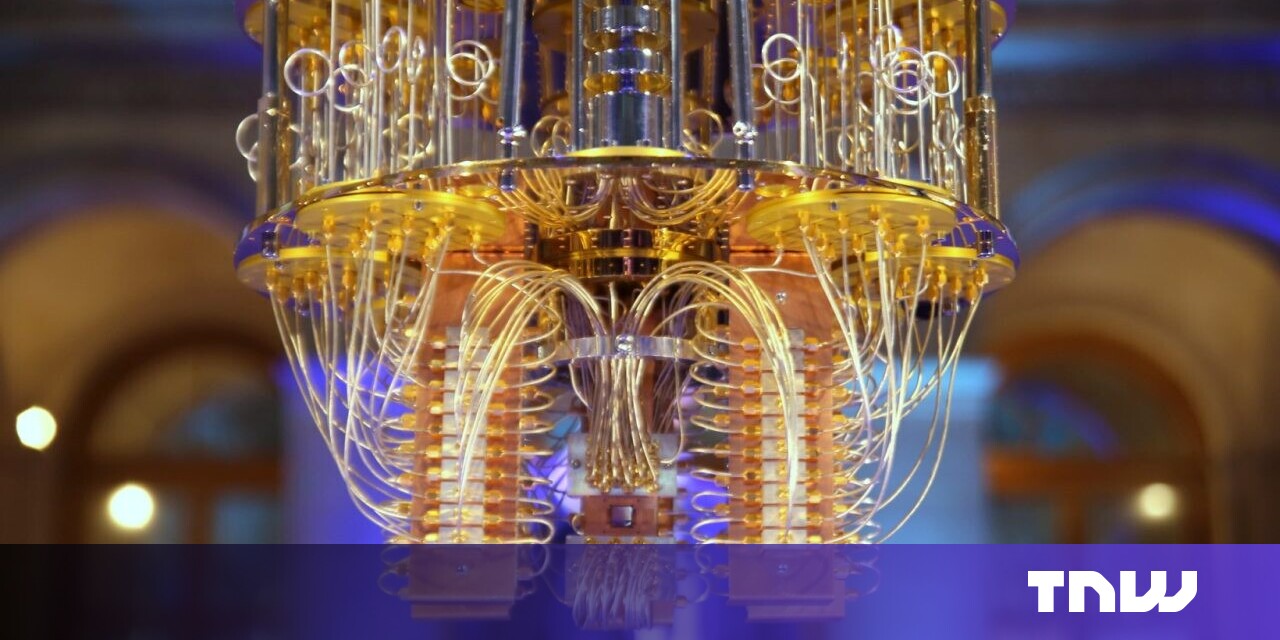
At a time when technological progress is constantly changing our world, one of the greatest threats Quantum computing.
While this powerful technology promises revolutionary benefits, it poses a significant risk to our current Cybersecurity Infrastructure. As we stand on the brink of this quantum revolution, it is imperative to understand the potential dangers and prepare accordingly.
The quantum leap
Quantum computers use the principles of quantum mechanics to perform calculations at speeds unimaginable for classical computers. In 2019, Google claimed to have demonstrated “quantum supremacy” when its Sycamore processor solved a problem in 200 seconds that would have taken the most advanced classical supercomputers nearly 10,000 years.
Although the specific performance is disputed, there is no denying that quantum computers have made tremendous strides toward computing power that far exceeds the fastest HPC systems of today. Recent advances suggest that quantum computers will soon become a reality, capable of cracking existing encryption methods.
The quantum threat
TNW Conference 2025 – Back to NDSM on June 19-20, 2025 – Save the date!
Having concluded our incredible 2024 edition, we are excited to announce our return to Amsterdam NDSM in 2025. Register now!
Current encryption methods that protect everything from personal Data to protect national security information rely on the difficulty of solving mathematical problems that traditional computers cannot handle efficiently. However, quantum computers can solve these problems exponentially faster, making traditional encryption obsolete. The risks include:
- Interception and misuse of data: All encrypted data is at risk of being intercepted and decrypted by quantum computers.
- “Harvest now, decrypt later” attacks: Malicious actors could collect encrypted data now in order to decrypt it once quantum computers are available.
- Compromise of critical systems: Failure to migrate to quantum-safe algorithms could lead to security breaches in business-critical and functional systems, impacting industries such as healthcare, finance and public services.
In August 2021, the US National Security Agency (NSA) announced that “The hostile use of a quantum computer could have devastating effects on national security systems and the nation as a whole. The enhanced security measures of quantum cryptography make this situation virtually impossible to breach and manage, providing a level of protection that far exceeds traditional encryption methods and is driving market growth.”
Who should be concerned?
Organizations that process sensitive data with long-term confidentiality requirements, such as personally identifiable information (PII), personal health information (PHI), legal documents, and intellectual property, are at significant risk. In addition, organizations that deploy long-life systems, such as medical devices, and suppliers to critical industries must prioritize quantum threat preparation.
Preparing for the quantum age
The question is not if quantum computers will crack current encryption, but when. Predictions vary, with some experts predicting the impact will be significant within the next decade. For example: Deloitte recommends Within ten years, serious threats from quantum computers could arise, while Forrester Predictions a chance of 50 to 70% within five years.
Steps to mitigate damage
To mitigate these looming threats, companies must take a proactive approach:
- Understanding business contexts and objectives: Identify how quantum threats impact specific business processes and data.
- Identify quantum threats: Assess which aspects of the business are most vulnerable to quantum attacks.
- Define target maturity: Set goals to achieve quantum-safe security measures.
- Assess current skills: Evaluate existing security measures against future quantum threats.
- Focusing on priorities: Prioritize areas that require immediate attention to improve quantum resilience.
- Develop a quantum security roadmap: Create a detailed plan for the transition to quantum-safe cryptography algorithms.
- Show the value of investments: Communicate to stakeholders the importance and benefits of investing in quantum security.
- Raising awareness: Inform all levels of the organization about the quantum threat and the necessary precautions.
Post-quantum cryptography (PQC) initiatives
Post-quantum cryptography (PQC) is currently the highest national security priority for most governments. NIST is struggling to define the next generation of FIPS 140.3 (512-bit) regulatory PQC standards, with the very first version coming in August 2024. Quantum Knight is part of the first group of FIPS 140.3 module validations.
These new NIST PQC algorithms are just raw ciphers, not a cryptographic system like CLEAR. After their release on August 13, these NIST algorithms now need to be leveraged and implemented across the entire data ecosystem mentioned above over the next 3-10 years.
Google, Apple, IBM, and others have begun improving cryptography in their systems and services, and have formed industry consortia to discuss and learn how to implement these new algorithms and make them usable for their customers. These efforts are simply aimed at improving their currently broken distributed data ecosystem (i.e. the hops/jumps/pass-thrus).
The way to the future
The transition to quantum-safe algorithms is not a simple process. It involves:
- Cooperation: Collaboration with academia, industry and governments to develop and standardize quantum-resistant algorithms.
- Resource allocation: Invest intelligently in quantum security technologies and processes.
- Training: Ensure that stakeholders understand the risks and required actions using clear and common terms.
- Comprehensive approach: Re-evaluating protocols, standards and hardware components beyond algorithms to ensure holistic security.
Despite these advances, the real challenge lies in the implementation and integration of quantum cryptographic solutions.
Many companies struggle to translate theoretical models into practical applications, resulting in a gap between promise and performance. This is where groundbreaking startups like Quantum Knight come in, providing robust and reliable solutions that not only meet but exceed industry standards.
Diploma
The advent of quantum computing is a double-edged sword: it offers unprecedented computing power while threatening to undermine our current cybersecurity frameworks. Organizations must act now, understand the threat, prepare for the inevitable, and transition to quantum-safe practices.
While the timeline remains uncertain, proactive steps taken today will protect the future from the quantum threat.
Amir Vashkover is a seasoned technology leader with extensive experience in operational and leadership roles in cybersecurity. He currently leads Philips' data security division and is a board advisor at post-quantum encryption provider Quantum Knight. Previously, Amir held leadership roles in various industries, including CISO, VP of business development and product management. He holds a university degree in electrical and computer engineering and an MBA from leading universities in Israel.

Comments are closed.