

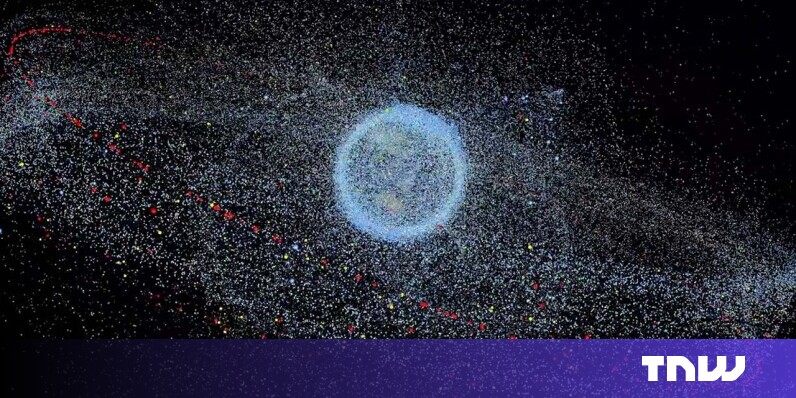
Space has become a crowded place. Astronomers estimate that there were over 10,000 active satellites in orbit last month—four times as many as five years ago.
The increasing number of launches has sparked excitement about a new space race. But cosmic traffic could be heading for a catastrophic crash.
On Earth, the British Space Operations Centre is monitoring the dangers with growing concern. In July alone, the centre warned British satellite operators of 1,795 collision risks. In the previous six months, almost 12,000 warnings were sent out.
But not every accident can be prevented. In 2021, a Chinese military satellite was damaged by a piece of a Russian rocket. In March, a piece of space debris pierced a roof in Florida.

The
The latest gossip from the EU tech scene, a story from our wise old founder Boris and questionable AI art. Free in your inbox every week. Sign up now!
As the number of satellite constellations increases, so does the risk of further accidents. Spacetech startups have therefore focused on a new area: collision avoidance.
Europe has become fertile ground for their plans.
The technology targets space collisions
Several startups have turned their attention to space debris.
Over 130 million pieces of garbage are currently racing around the Earth at speeds of up to 15 km/s. If one of them hits a satellite, the consequences could be devastating.
Spacetech offers numerous possibilities to create order.
Swiss startup ClearSpace wants to deploy a robot that collects garbage. The company has signed a contract with French rocket giant Arianespace for the debut Mission.
The Norwegian company Solstorm has a completely different idea: It uses solar and wind energy to remove the junk from orbit. The startup also offers collision detection.
Spanish startup IENAI has a different propulsion plan. The company uses electrospray thrusters to avoid collisions and deorbit defunct satellites.
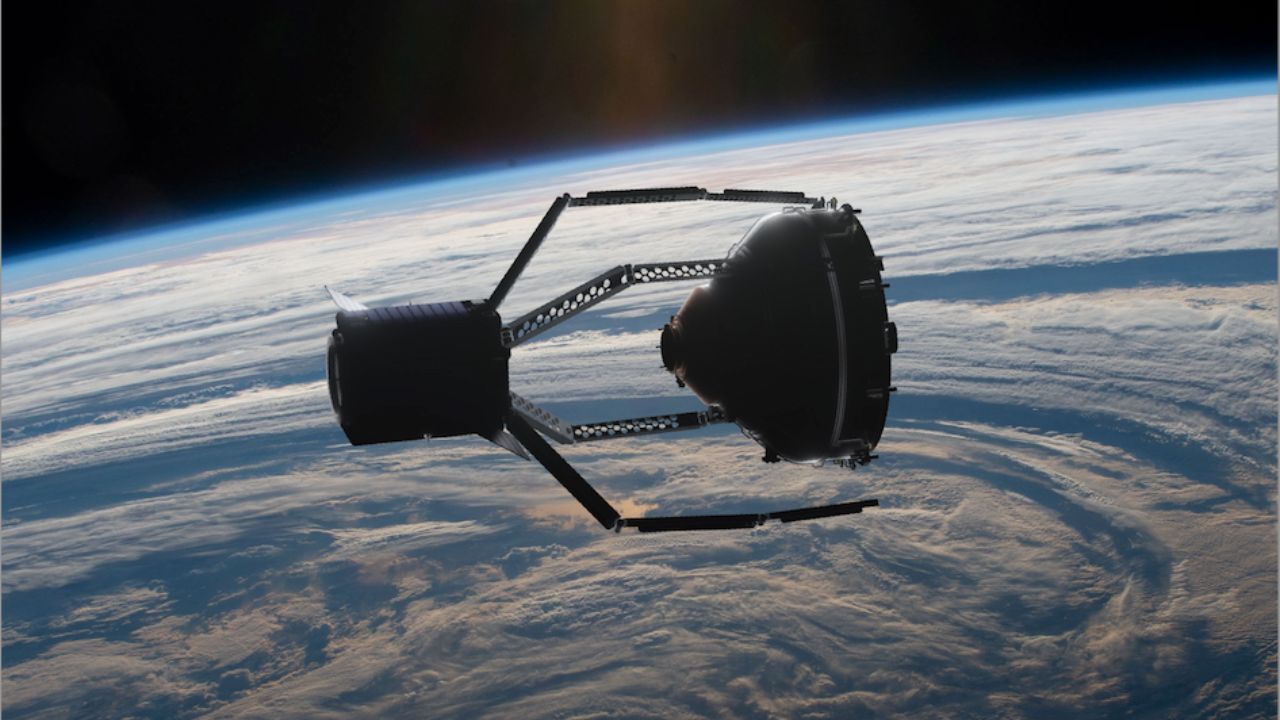 ClearSpace aims to remove space debris from orbit for the first time in 2025. Image credit: ESA
France has also produced striking solutions.
One of them is Look Up Space, which builds radars on Earth to detect space junk. Another is Dark, which builds a rocket-powered boxing glove to punch away space junk.
Across the German border, Munich-based company Vyoma is focusing on space traffic management. By combining a sensor network with real-time mapping of space, the company could reduce the risk of collisions.
Preparing for the start
All of these startups still have to prove that their concepts work in practice. Space experts hope that this will happen soon.
“The risk of collision in the busiest orbit – 800 kilometers from Earth – is now one in 1,000,” said space insurance expert Pascal Lecointe in January.
“Just a few decades ago, when there were far fewer satellites and space debris, the risk of collision was one in a million.”
With no sign of a slowdown in satellite launches, Lecointe expects the threat to increase.This risk is expected to increase further over the next decade, to perhaps 1 in 100.”

Comments are closed.