

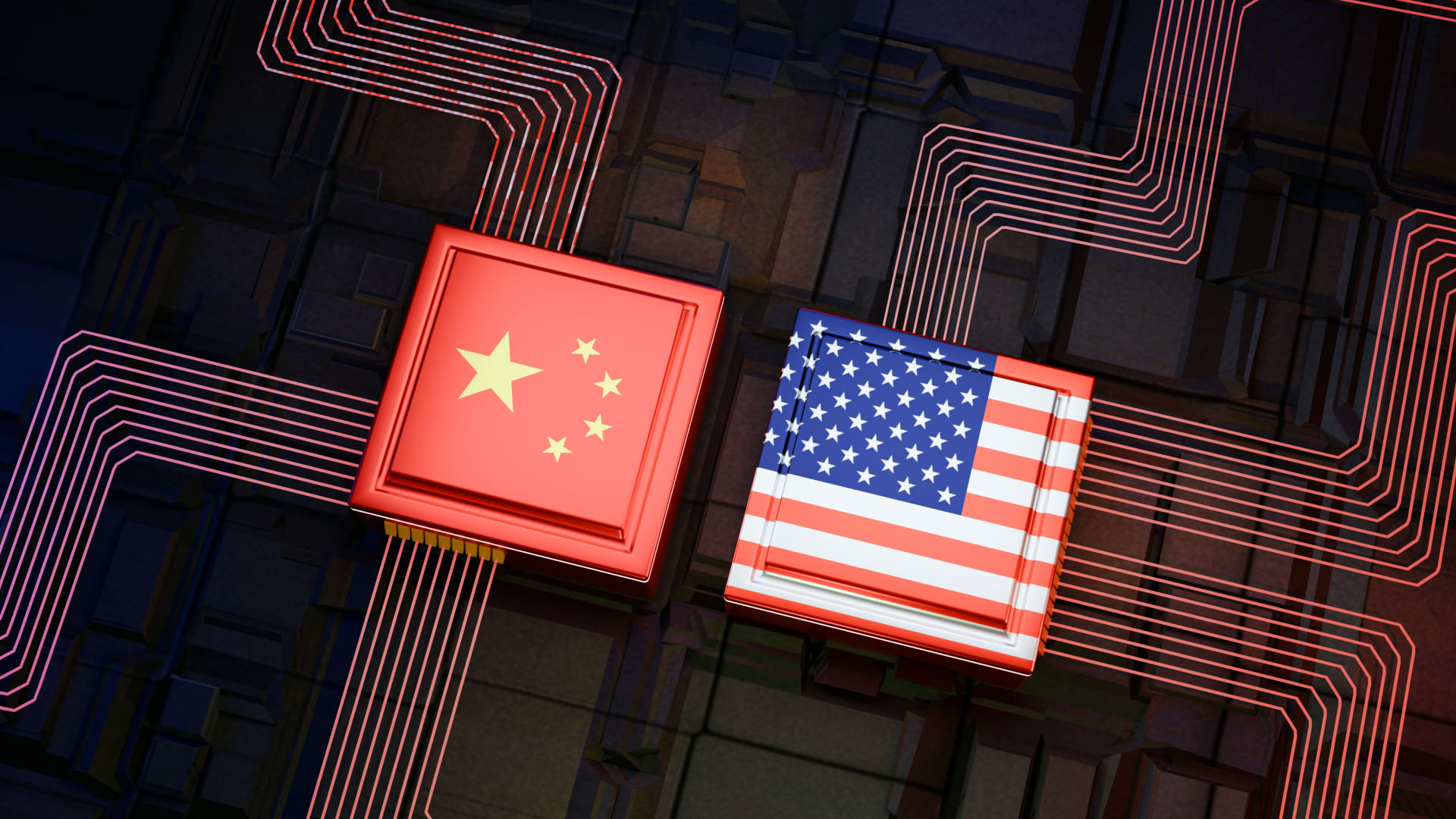
The U.S. moves came after Bloomberg reported on Wednesday that the Biden administration is considering cracking down on companies that export their critical chipmaking equipment to China.
Wong Yu Liang | Moment |
Chip stocks in Asia plunged on Thursday after a sell-off in technology stocks on Wall Street and reports that the U.S. could consider tighter export restrictions.
Shares of Taiwanese semiconductor manufacturing company — the world's largest chip supplier — fell as much as 4.3% in Asian trading before paring losses. The company reported on Thursday that second-quarter revenue and profit expectations were better than expected.
TSMC's suppliers were also affected. Japanese engineering companies Tokyo Electron Drop of almost 9%, while Screen stocks fell by more than 8%.
Other chip-related stocks such as suppliers of lithography materials Tokyo Ohka Kogyo and industrial water companies Organo also fell by 4.53% and 3.13% respectively.
According to a Bloomberg report on Wednesday, the Biden administration may be considering tougher measures against companies that export their critical chipmaking equipment to China, which would further escalate tensions between the two superpowers.
“Chipmakers are the darlings of the market. Almost everything we touch is digitized. Tariffs and trade restrictions of any kind will impact these chipmakers. We see this all over the world,” said Ayako Yoshioka, senior portfolio manager at Wealth Enhancement Group.
South Korean chip stocks were not spared either. Samsung Electronics fell by almost 2%, while SK Hynix fell nearly 5% and SK Square fell nearly 10%.
However, Yoshioka said buying opportunities remain for long-term investors.
“The market is heavily influenced by sentiment and headlines alone, especially in the short term. In the long term, you really have to focus on the promise, [artificial intelligence] and what it can really do for so many businesses and consumers,” she told CNBC's Street Signs Asia.
“Political hurdles can definitely be a catalyst for negative market performance. Corporate earnings can also be a catalyst as expectations are high at the start of earnings season. This can potentially put negative pressure on some stocks in the short term,” Yoshioka explained.
The Foreign Direct Product Rule (FDPR) allows the United States to control products manufactured abroad, even if they use very little American technology, which can be a disadvantage for non-American companies.
The spillover effect on Asian technology stocks came as ASML and Nvidia suffered sharp declines on Wall Street, with losses of 12% and 7%, respectively.
ASML Holdingswhich makes machines that produce the world's most advanced chips, closed more than 12% lower despite better-than-expected second-quarter results.
Arm, AMD, Marvell, Qualcomm and Broadcom ended the trading day down more than 7%.
Separately, Republican U.S. presidential candidate Donald Trump told Bloomberg Businessweek on Wednesday that Taiwan should pay the U.S. for defense. He also accused Taiwan of taking “about 100 percent” of the American chip business.
— CNBC's Arjun Kharpal contributed to this report.

Comments are closed.